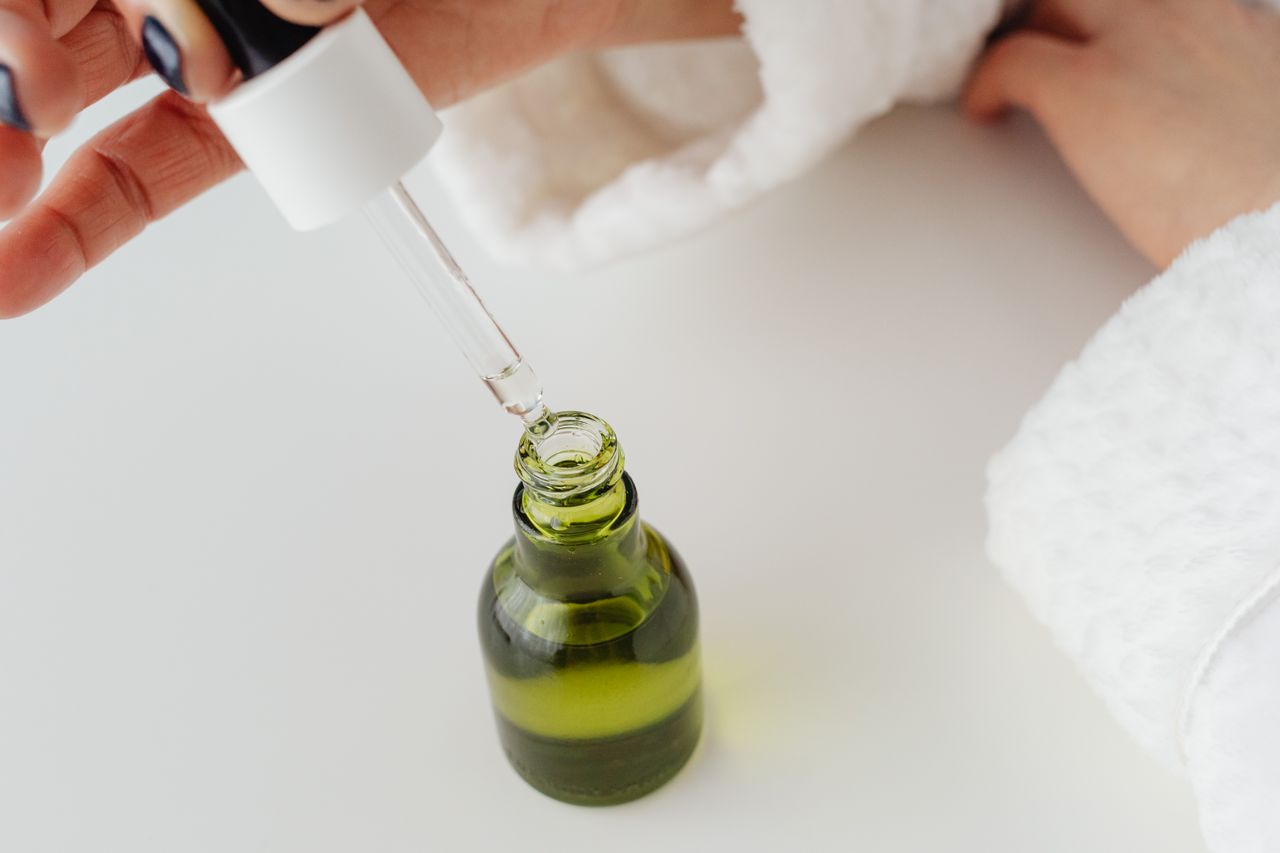
AnaGain appears in two very different kinds of product: topical serums and scalp tonics on one side, oral capsules and supplement drinks on the other. Both formats have supporting research from Mibelle Biochemistry, the Swiss company that developed the ingredient. Neither has been tested against the other.
That last point matters, because it means anyone telling you the serum works better than the capsule, or the other way round, is telling you something the research does not show. Here is what each study actually measured.
The short version
The topical work was a two week gene expression study. It looked at what happens inside hair follicle cells at a molecular level. It did not measure hair.
The oral work was a 56 day trial, counted shed hairs and took scalp photographs. It did not measure gene expression.
Two different questions, two different answers, no direct comparison between them.
What the topical research measured
Mibelle developed AnaGain using a bioassay-guided approach based on DNA microarray technology. In the study most often quoted by serum brands, gene expression was analysed on plucked hair bulbs after two weeks of treatment with a 2% AnaGain Nu preparation.
Two signalling molecules were upregulated:
- Noggin, by 85%. Noggin is involved in shortening the telogen phase, which is the resting portion of the hair cycle.
- FGF-7, by 56%. FGF-7 is fibroblast growth factor-7, involved in the proliferation of matrix keratinocytes at the beginning of a new anagen phase.
Both are produced by dermal papilla cells, the cluster of cells at the base of the follicle that governs cycling. We go into the mechanism properly in our main AnaGain guide.
What this study demonstrates is that the extract can influence the signalling environment in follicle cells. What it does not demonstrate is a visible result on a person's head, because that is not what it was designed to measure. Gene expression changes are a plausible mechanism, not an outcome.
What the oral research measured
The oral study was an open application trial running 56 days. Healthy adults of mixed genders, mean age 43.9 years, all losing 100 or more hairs daily at baseline, with a group mean of 163.7.
Each took 100mg of AnaGain Nu daily in a drink. Assessments were taken at day 0, day 28 and day 56, covering lost hair counts, scalp photographs and a questionnaire.
Reported was a 34% reduction in hair loss counts at one month and 37% at two months, both statistically significant, along with visibly improved hair density. Of the volunteers, 86% reported noticing a reduction in shedding and 76% wanted to continue.
The findings were published in Phytotherapy Research, 2020, volume 34, issue 2, pages 428 to 431.
This one measured a visible endpoint.
The question serum labels rarely answer
Here is the practical problem with buying a topical on the strength of that gene expression data.
The study used a 2% preparation. Most serums do not tell you what concentration of AnaGain they contain. AnaGain might sit near the top of the ingredients list or near the bottom, and unless the brand publishes a figure, you have no way of knowing whether you are getting something close to what was studied or a fraction of it.
This is not unique to AnaGain or to serums. It is the general condition of the active ingredient market. But it is worth asking before you spend, and any brand confident in its formulation should be able to tell you.
The same test applies to capsules. If a supplement lists AnaGain without a milligram figure, you cannot compare it to the 100mg used in the trial. It is also worth checking which grade is declared, since AnaGain and AnaGain Nu are different raw materials and only the Nu grade is specified for oral use. We cover that distinction in our guide to AnaGain vs AnaGain Nu.
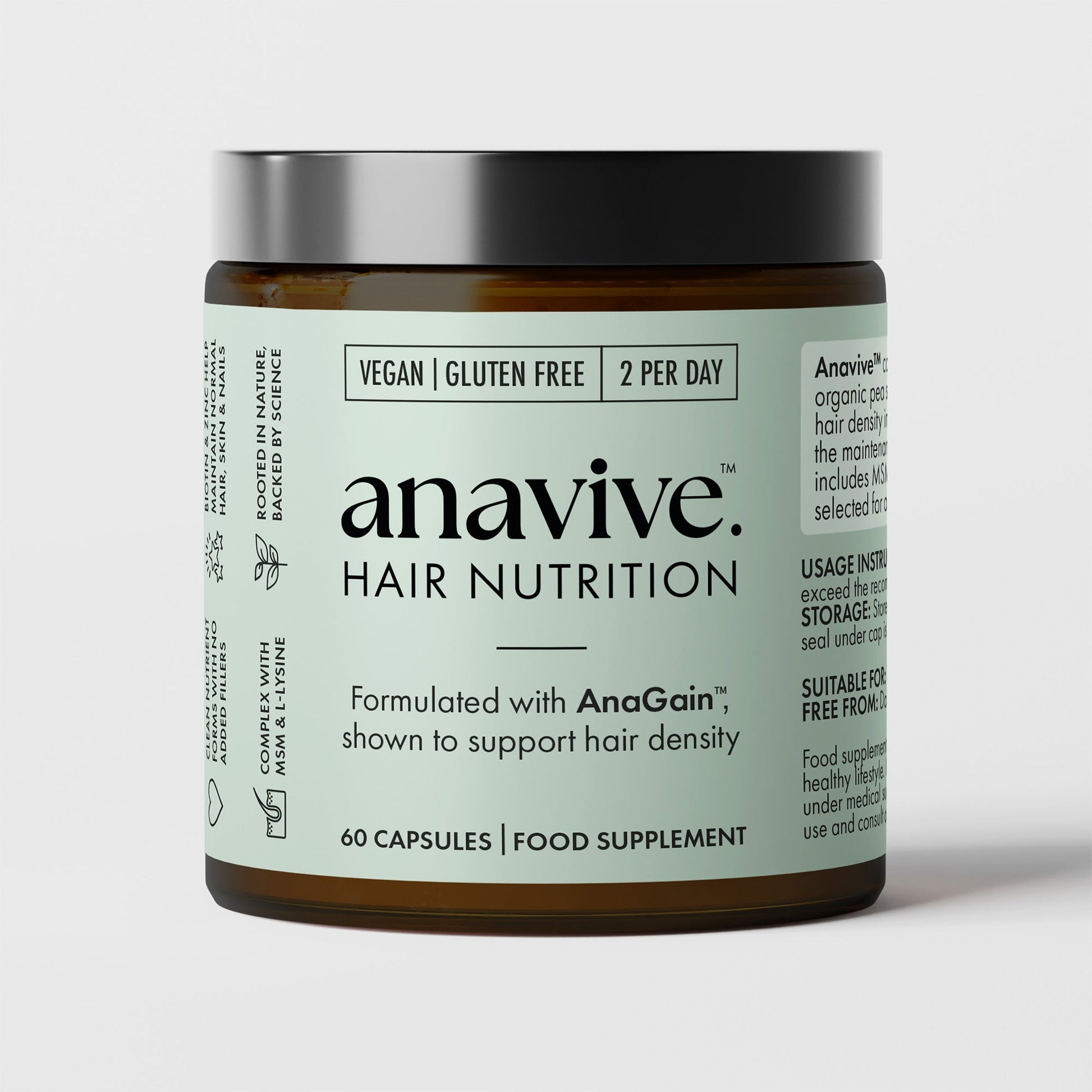
For transparency on our own product: Anavive contains 100mg of AnaGain Nu per daily serving, matching the grade and dose used in the published oral study.
Topical or oral: how to think about it
Rather than asking which is better, it helps to ask what each one can and cannot reach.
A serum delivers an active to the scalp surface. That is direct access to the area you care about, and no digestive system in the way. What it cannot do is address anything happening elsewhere in the body.
An oral supplement is systemic. It cannot target the scalp specifically, but it can carry more than one ingredient at once, which matters because hair is not built from a single input. Follicles need iron for oxygen transport, and vitamin C increases iron absorption. Zinc and biotin contribute to the maintenance of normal hair. Copper contributes to the maintenance of normal hair pigmentation. Vitamin B6 contributes to the regulation of hormonal activity.
A serum cannot correct a nutritional shortfall. A capsule cannot sit on your scalp. They are answering different parts of the same problem.
If the underlying issue is a nutritional one, no topical will resolve it. If you want to understand where those shortfalls tend to come from, our evidence review on supplements for hair loss in women is the place to start.
What about combining them?
No published study has tested AnaGain topically and orally at the same time, so nobody can tell you whether the effects add up, overlap or make no difference in combination. Anyone claiming otherwise is guessing.
If you are already using a prescribed topical treatment, or being treated for a scalp condition, check with your pharmacist or GP before layering products.
Common questions
Does AnaGain work better as a serum or a supplement?
There is no head to head study, so this cannot be answered from the evidence. Mibelle states that efficacy has been demonstrated for both oral and topical applications, but those were separate studies with different designs and different endpoints.
What concentration of AnaGain should a serum contain?
The bioassay work used a 2% preparation. Most serums do not publish their concentration. If it is not stated, ask the brand.
How much AnaGain is in a capsule?
It varies by product. The oral trial used 100mg daily. Check the supplement facts panel for a milligram figure rather than relying on the ingredient appearing in the list.
Is AnaGain in shampoo any use?
Rinse-off products have very short contact time with the scalp compared to a leave-on serum. No study has assessed AnaGain delivered in a rinse-off format, so there is no evidence to draw on.
Where to read next
- AnaGain for hair growth: what it is, how it works and what the research actually shows
- Your scalp microbiome: what matters, what is nonsense
- Red light therapy: does it actually work
Anavive is a food supplement and is not a treatment for any medical condition. If you are experiencing sudden or significant hair loss, speak to your GP. AnaGain is a trademark of Mibelle AG Biochemistry.