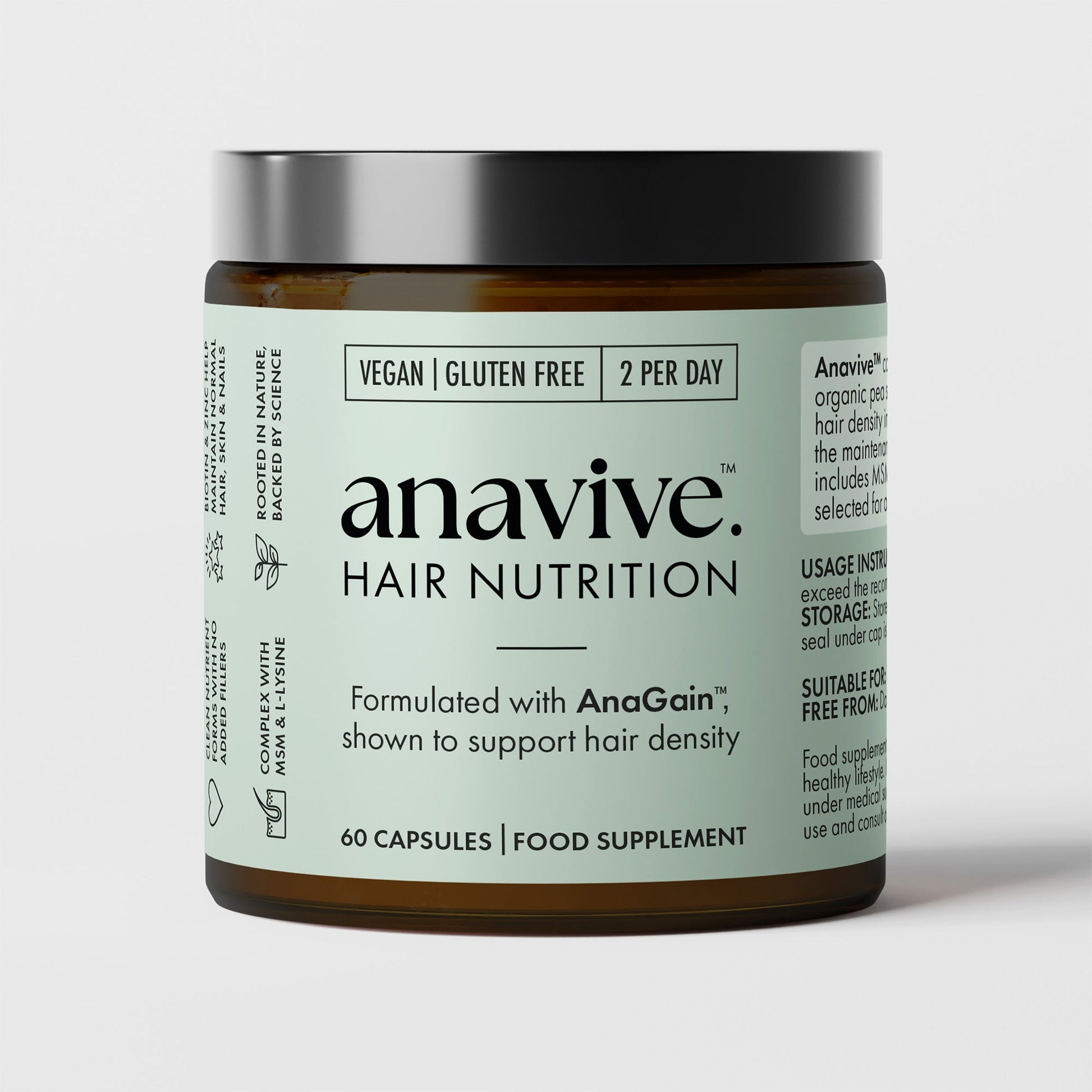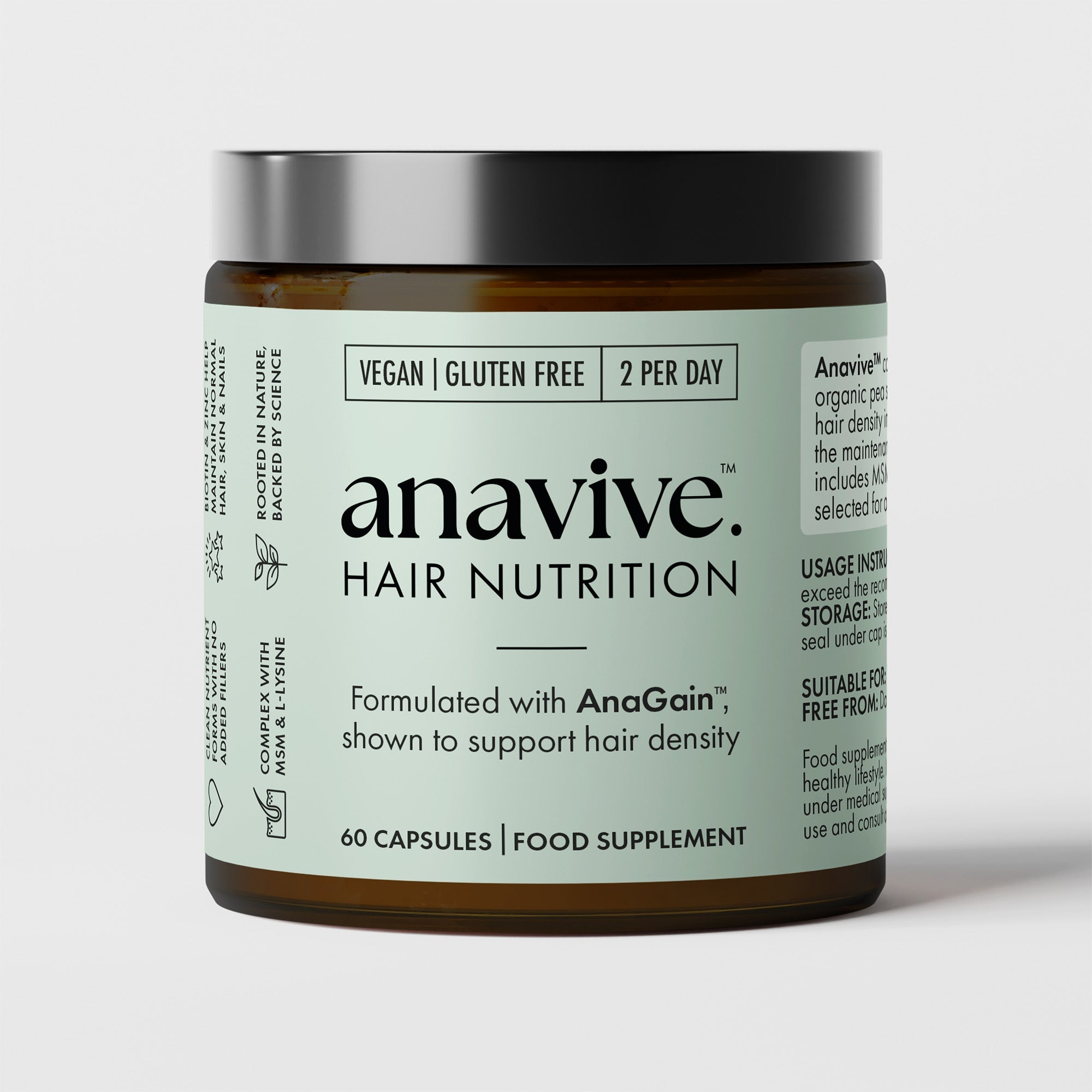
If you have been researching ingredients for thinning hair, there is a good chance you have come across AnaGain™. It appears in a growing number of hair supplements and topical products, and searches around what it does, whether it actually works, and how it compares to treatments like minoxidil have surged over the past year. The questions people are asking are good ones, and they deserve straight answers rather than marketing spin.
This guide addresses the most common questions about AnaGain, places it in context alongside the vitamins and minerals that genuinely matter for thinning hair, and gives you an honest picture of what this ingredient can and cannot do.
What Is AnaGain?
AnaGain is a trademarked extract derived from organic pea shoots (Pisum sativum), developed by Swiss biochemistry group Mibelle. It is available in topical form (AnaGain) and as an oral supplement ingredient (AnaGain Nu). The extract is rich in phytonutrients, including isoflavones, cytokinins, and the amino acid L-arginine, all of which have been studied in the context of hair follicle function.
What makes AnaGain different from a generic "plant extract" is its specific mechanism. Research has shown that it stimulates the expression of two signalling molecules in the dermal papilla (the control centre at the base of each hair follicle): fibroblast growth factor-7 (FGF7) and noggin. FGF7 is directly involved in initiating new hair growth, while noggin helps counteract signalling pathways that push follicles into their dormant phase. In simple terms, AnaGain appears to help reactivate resting follicles and keep active follicles growing for longer.
Does AnaGain Regrow Hair?
This is the question most people start with, and the honest answer requires some nuance. AnaGain does not "regrow hair" in the way that term is commonly understood, meaning it will not bring back follicles that have been permanently lost or restore a receding hairline to its teenage state. No supplement ingredient can do that.
What AnaGain has been shown to do in clinical research is improve the ratio of active (anagen) to resting (telogen) hair follicles. In a clinical study, topical application of AnaGain improved the anagen-to-telogen ratio from 4.0 to 7.2 over three months, representing a 78% increase in the proportion of follicles in their active growth phase. A separate pilot study on the oral form (AnaGain Nu) found that 100mg daily significantly reduced hair shedding after just 28 days of supplementation, with 86% of participants reporting reduced hair loss after eight weeks.
So AnaGain does not create new follicles, but it does appear to help existing follicles spend more time growing and less time resting, which translates to reduced shedding and improved density over time. For people experiencing diffuse thinning or increased shedding (rather than advanced pattern baldness), this is a meaningful and relevant benefit.
Is AnaGain a DHT Blocker?
No. AnaGain is not a DHT blocker and works through an entirely different mechanism. DHT (dihydrotestosterone) is the hormone most associated with androgenetic alopecia (pattern hair loss). Treatments like finasteride work by blocking the enzyme that converts testosterone into DHT, thereby reducing follicle miniaturisation.
AnaGain does not interact with hormonal pathways at all. Instead, it works at the level of the hair follicle's growth signalling, encouraging follicles to re-enter the growth phase by upregulating FGF7 and noggin expression. This makes AnaGain suitable for people who want to support their hair growth cycle without affecting their hormone levels, and it is one of the reasons it is considered a safe, well-tolerated option with no reported side effects in clinical studies.
Is AnaGain the Same as Minoxidil?
No. AnaGain and minoxidil are fundamentally different in their classification, mechanism, and how they are used.
Minoxidil is a pharmaceutical treatment, originally developed as a blood pressure medication, that was found to promote hair growth as a side effect. It works primarily through vasodilation, widening blood vessels in the scalp to increase blood flow and nutrient delivery to the follicle. It is available as a topical solution or foam and as an oral medication, and it is one of the most established treatments for androgenetic alopecia. However, minoxidil can cause side effects including scalp irritation, unwanted facial hair growth, and in some cases dizziness or heart palpitations (particularly with oral use). Results are also dependent on continuous use: if you stop applying or taking minoxidil, the benefits typically reverse.
AnaGain is a natural plant extract classified as a cosmetic or food supplement ingredient, not a medicine. Its mechanism of action targets gene expression in the dermal papilla (FGF7 and noggin) rather than vasodilation. It has shown no adverse effects in clinical studies. While both aim to support hair growth, they work through completely different biological pathways, and comparing them directly is not particularly useful. Some people use both as part of a layered approach, as their mechanisms are complementary rather than competing.
Does AnaGain Actually Work?
The clinical evidence for AnaGain is genuinely promising, though it is important to be transparent about its current limitations. The published research includes a topical study showing a 78% improvement in the anagen-to-telogen ratio, and an oral supplementation pilot showing statistically significant reduction in hair shedding within 28 days. The gene expression data (56% increase in FGF7, 85% increase in noggin) provides a plausible biological mechanism for these results.
When AnaGain is used as part of a broader formulation alongside well-established hair health nutrients, the combination addresses multiple pathways simultaneously, which is the approach most likely to produce meaningful results.
What Are the Disadvantages of AnaGain?
In terms of safety, there are no known disadvantages. Clinical studies have reported no adverse effects from either topical or oral use, which is one of AnaGain's genuine strengths compared to pharmaceutical alternatives.
The main limitations are about expectations rather than risks. AnaGain is not a treatment for advanced hair loss or androgenetic alopecia in the way that finasteride or minoxidil are. It will not reverse significant pattern baldness. Its benefits are most relevant for people experiencing diffuse thinning, increased shedding, or early-stage hair loss where follicles are still viable but spending too much time in the resting phase. Users will benefit from AnaGain in that it doesn't affect your hormone balance in order to stimulate growth, like most hair loss medications.
It is also important to understand that AnaGain works best as part of a comprehensive approach. Using it in isolation without addressing underlying nutritional deficiencies or scalp health is unlikely to deliver the full benefit. The ingredient targets one specific pathway (follicle growth signalling), but your hair needs support across multiple pathways simultaneously to thrive.
How Long Does It Take for AnaGain to Work?
The oral supplementation study showed a statistically significant reduction in hair shedding within 28 days, which is encouraging and faster than many people expect. However, reduced shedding is not the same as visible regrowth. Here is a realistic timeline for what to expect.
Weeks 2-4: You may notice reduced hair fall when brushing or washing. This is the earliest measurable sign that follicle cycling is beginning to shift.
Months 1-3: Shedding continues to reduce. The anagen-to-telogen ratio improves, meaning more of your follicles are in the active growth phase. You may not see dramatic visible changes yet, but the groundwork is being laid beneath the surface.
Months 3-6: This is typically when visible improvements begin to emerge. New growth starts to come through, and overall density may begin to look and feel fuller. The clinical study showing a 78% improvement in the growth ratio was measured at the three-month mark.
Months 6-12: Continued improvement and consolidation. Hair grows at roughly 1cm per month, so new growth takes time to reach a length where it contributes meaningfully to overall volume and density.
Consistency is non-negotiable. Like any ingredient that works with your natural hair cycle, AnaGain requires daily, sustained use to maintain its effects on follicle signalling. Stopping and starting will not deliver the same results as consistent daily supplementation.
What Vitamins Are You Lacking If Your Hair Is Thinning?
This is one of the most commonly searched questions about hair loss, and it is a crucial one, because nutritional deficiencies are among the most correctable causes of thinning hair. If your body lacks the raw materials your follicles need, no ingredient, whether AnaGain, minoxidil, or anything else, will perform at its best.
The nutrients most commonly associated with hair thinning include:
Iron - Contributes to normal oxygen transport in the blood. Iron deficiency (measured as low ferritin) is one of the most common and most overlooked causes of diffuse hair shedding, particularly in women. Your follicles need oxygen to fuel the energy-intensive process of growing hair, and without adequate iron, delivery falls short. Iron bisglycinate is the most bioavailable and best-tolerated supplemental form.
Zinc - Contributes to the maintenance of normal hair and normal protein synthesis. Zinc is involved in cell division, tissue repair, and the structural proteins that hair is made of. Deficiency disrupts the hair growth cycle and can increase shedding. Zinc bisglycinate is significantly better absorbed than zinc oxide or zinc sulphate.
Biotin - Contributes to the maintenance of normal hair. Biotin supports keratin production, the primary structural protein of hair. While severe biotin deficiency is uncommon, suboptimal levels can contribute to hair that is weaker and more prone to breakage.
Vitamin B12 - Contributes to normal red blood cell formation. B12 deficiency can impair red blood cell production, which in turn reduces oxygen delivery to the scalp and follicles. This is particularly relevant for people on plant-based diets, as B12 is primarily found in animal products. While B12 supplementation can support hair health when a deficiency exists, it is important to note that it will not "reverse" hair loss that is caused by genetics or hormones.
Vitamin D - Research has linked vitamin D deficiency to several types of hair loss. However, the relationship is complex. While very low vitamin D can contribute to thinning, there is no strong evidence that excessively high vitamin D intake causes hair loss. The concern about "too much vitamin D causing hair loss" is largely a misconception for most people, though extremely high supplemental doses over long periods should always be avoided. Getting your levels tested is the best approach.
Vitamin B6 - Contributes to normal protein and glycogen metabolism. Since hair is predominantly protein, B6 supports the metabolic processes that build and maintain hair structure. The active form, pyridoxal-5-phosphate (P5P), is more efficiently used by the body than standard pyridoxine.
Iodine - Contributes to normal thyroid function. Your thyroid regulates many aspects of your metabolism, including the hair growth cycle. Low iodine can lead to suboptimal thyroid function, which is a well-established contributor to hair thinning.
Copper - Contributes to normal hair pigmentation and normal immune function. Copper works alongside zinc in supporting the structural integrity of hair and the immune function that maintains a healthy scalp environment.
If you are experiencing unexplained thinning, asking your GP to check your ferritin, serum zinc, vitamin D, B12, and thyroid function is a practical and important first step.
Why a Multi-Ingredient Approach Matters More Than Any Single Ingredient
One of the biggest mistakes people make when addressing thinning hair is looking for a single magic ingredient. The reality is that hair growth is a complex biological process that depends on multiple nutrients, signalling pathways, and environmental factors working together.
AnaGain targets follicle growth signalling. Iron delivers oxygen. Zinc supports protein synthesis. Vitamin C enhances iron absorption and supports collagen. Biotin supports keratin structure. Ashwagandha helps manage the stress response that can trigger shedding. MSM and L-lysine provide the structural building blocks. Silica from bamboo extract supports hair strength. Cayenne pepper extract promotes scalp circulation.
No single one of these ingredients addresses the full picture. But when they are combined in a well-formulated supplement using bioavailable forms (iron bisglycinate rather than ferrous sulphate, zinc bisglycinate rather than zinc oxide, active B6 rather than standard pyridoxine), you create a comprehensive foundation that supports your hair across multiple pathways simultaneously.
This is the approach that gives your hair the best chance of responding, whether you are using AnaGain-containing supplements alone or combining them with topical treatments, red light therapy, or clinic-based interventions like PRP. The foundation always comes first.
The Bottom Line
AnaGain is a genuinely interesting, clinically studied natural ingredient with a clear mechanism of action and promising early data. It is not a pharmaceutical, it is not a miracle cure, and it is not a replacement for addressing underlying nutritional deficiencies. But as part of a well-formulated supplement that combines it with the bioavailable vitamins, minerals, and amino acids your follicles depend on, it adds a meaningful and complementary layer of support that targets the hair growth cycle directly.
The most effective approach to thinning hair is not about finding one perfect ingredient. It is about building a consistent, comprehensive foundation that addresses the multiple factors that influence how your hair grows. AnaGain is a valuable part of that foundation, and when combined with the right nutrients and a healthy routine, it plays its role well.
This article is for informational purposes only and does not constitute medical advice. If you are experiencing hair loss, please consult your GP or a qualified dermatologist. Nutrient information referenced in this article reflects EFSA-approved health claims where indicated. AnaGain is a trademark of Mibelle AG Biochemistry. Individual results from supplementation vary and depend on underlying health status and nutritional needs.