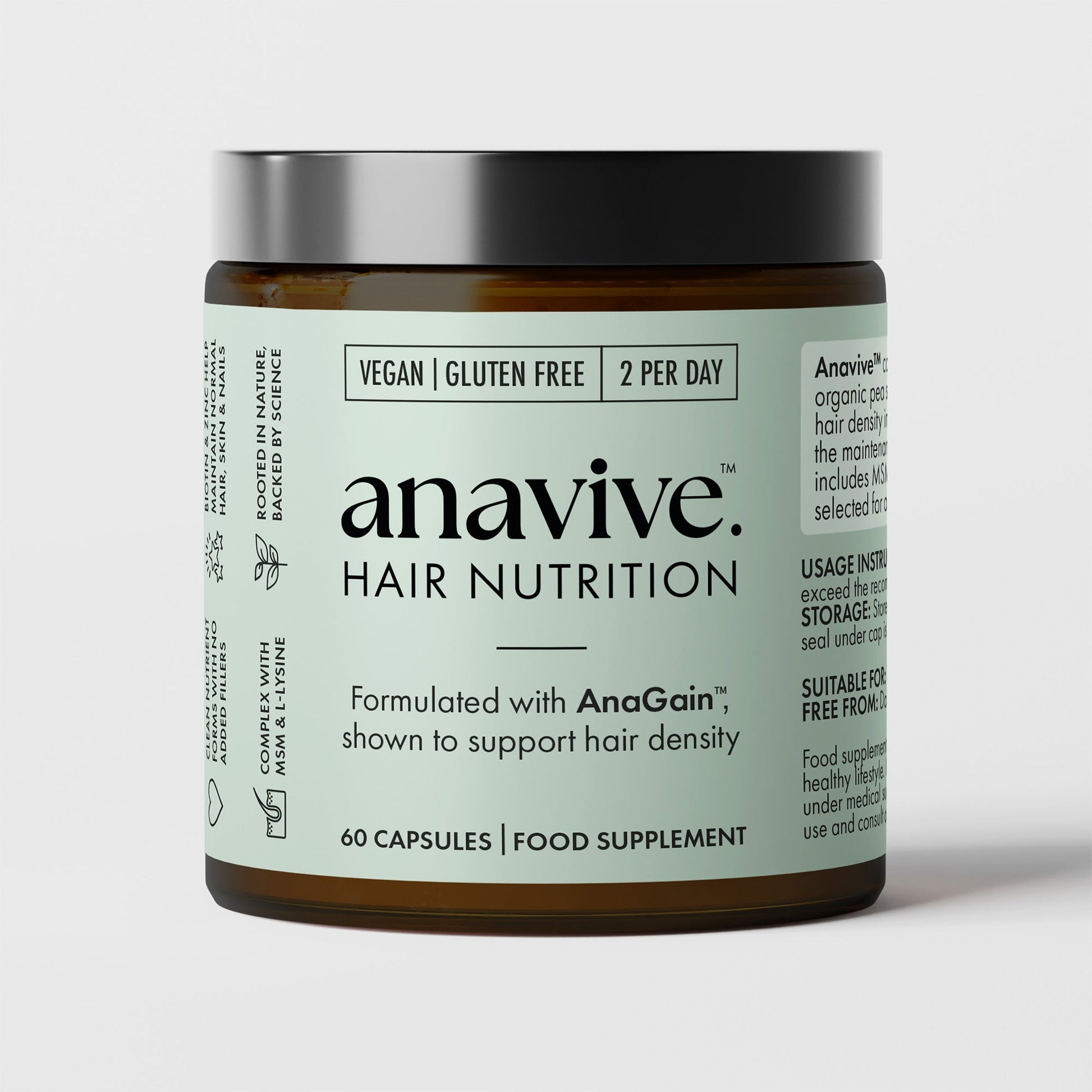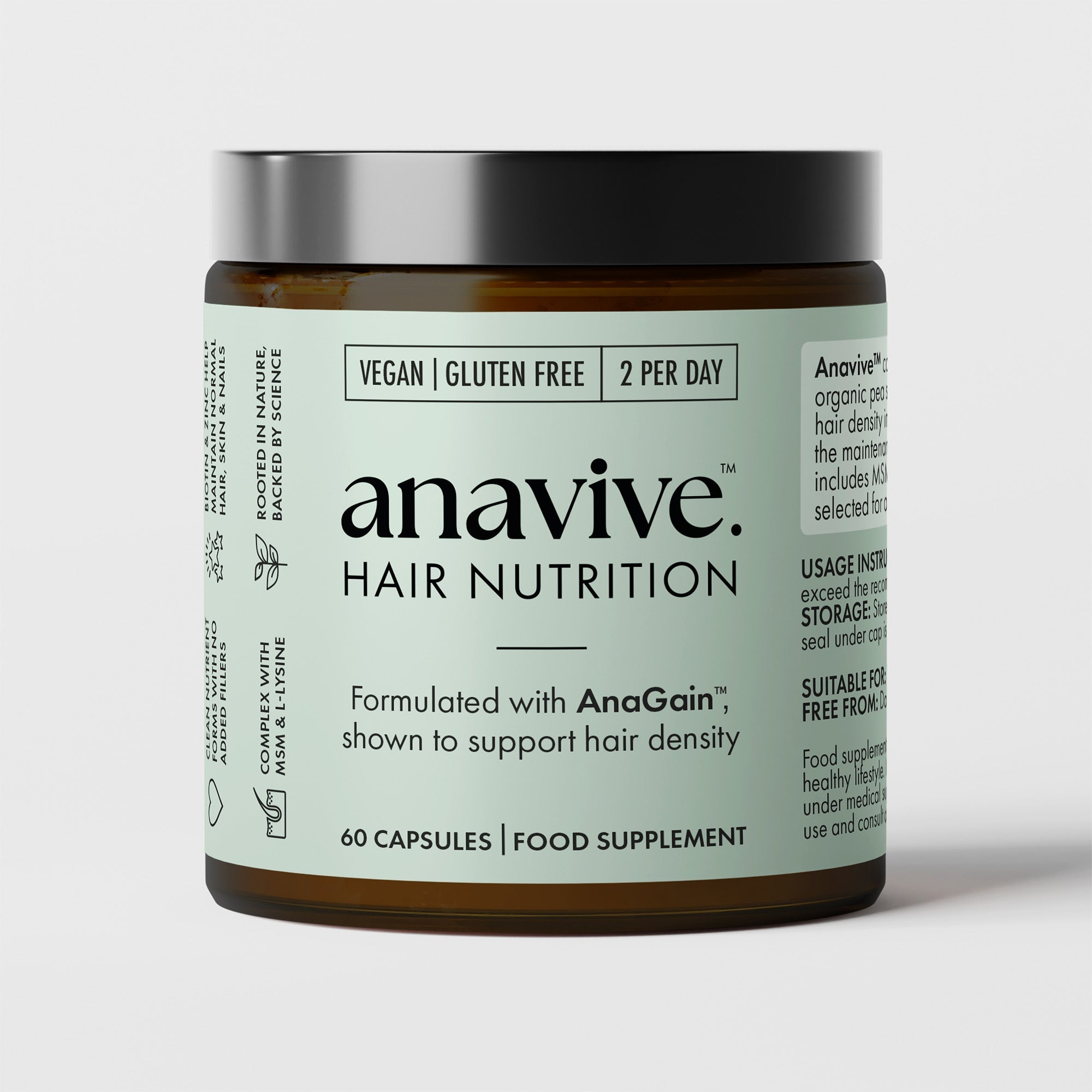
Hair loss is one of the most searched health topics in the UK, and the supplement aisle has never been more crowded. But which nutrients genuinely have a role in supporting hair health, how do they work internally, and what should you actually look for in a formula? This guide covers the science clearly, without the noise.
15 min read
Key Points
- Hair loss in women has multiple underlying causes - nutritional, hormonal, and stress-related - and addressing only one rarely resolves it.
- Iron, zinc, biotin, iodine, and vitamin B6 all have EFSA-authorised links to normal hair maintenance; deficiency in any one of them can disrupt the hair cycle.
- The form a nutrient is delivered in matters enormously - chelated and active forms are significantly better absorbed than standard oxide or synthetic versions.
- AnaGain™, a clinically studied pea shoot extract, has been shown in peer-reviewed research to influence specific signalling proteins involved in the hair growth cycle (Phytother Res. 2020;34(2):428-431).
- High-dose biotin can interfere with certain laboratory blood tests, including thyroid panels - always inform your GP if you are taking a biotin supplement before tests are arranged.
- Supplements are a nutritional foundation, not a medical treatment. Sudden, patchy, or painful hair loss always warrants GP assessment to exclude a treatable underlying condition.
Why Hair Loss in Women Is Rarely Simple
Around 40% of women in the UK will notice meaningful changes in hair density by the time they reach their fifties, but the experience is not confined to that age group. Younger women in their twenties and thirties are increasingly reporting increased shedding, reduced density, and changes in hair texture - often without a single identifiable cause.
That is because female hair loss is, in most cases, multi-factorial. The hair follicle is one of the most metabolically active structures in the body. It responds to shifts in hormonal status, nutrient availability, stress signalling, and circulation - often all at once. When clinicians and researchers study female hair loss, they consistently find that it is the combination of pressures, rather than any one factor, that tips the balance from healthy cycling into increased shedding.
The most commonly identified contributing factors include:
- Telogen effluvium - a phase of diffuse, temporary shedding triggered by physical or psychological stress, illness, surgery, rapid weight change, or nutritional depletion. The hair follicle responds to internal stress by entering a resting phase earlier than it should.
- Female pattern hair loss (androgenetic alopecia) - a genetically influenced condition in which follicles gradually become sensitive to androgens, producing progressively finer strands and shortening the active growth phase.
- Hormonal transitions - perimenopause, postpartum recovery, and thyroid dysfunction all alter the hormonal signalling that governs how long follicles spend in each phase of the hair cycle.
- Nutritional deficiency - iron, zinc, iodine, and B vitamins are among the nutrients most closely associated with hair follicle function, and deficiency in any of them can push more follicles into the resting phase prematurely.
- GLP-1 medication use - a growing number of women using GLP-1 receptor agonists for weight management report accelerated hair shedding, likely driven by the rapid nutritional deficit that accompanies significant caloric restriction.
- Chronic stress - elevated cortisol has a direct effect on hair follicle cycling, and psychological stress is one of the more underappreciated drivers of increased shedding in women of working age.
Understanding which combination of factors is at play matters, because the nutritional support required differs depending on the underlying picture. Supplementation that addresses only one pathway is unlikely to be sufficient where multiple pressures are acting simultaneously on the follicle.
Understanding the Hair Growth Cycle
Every hair on your head is independently cycling through three distinct phases. Knowing how that cycle works makes it much easier to understand why nutritional support takes time - and why addressing the internal environment matters more than most topical approaches can offer.
| Phase | What Is Happening | Typical Duration |
|---|---|---|
| Anagen (growth) | The follicle is actively producing a hair shaft. This is the phase that determines both hair length and density. The proportion of follicles in anagen at any one time reflects overall hair fullness. | 2-7 years |
| Catagen (transition) | The follicle detaches from its blood supply and begins to regress. This is a brief, controlled phase of natural cessation before rest begins. | 2-3 weeks |
| Telogen (rest and shed) | The follicle rests before the old strand is released and a new anagen cycle begins. Under normal conditions, approximately 10-15% of follicles are in this phase at any time. | 3-4 months |
Visible thinning and increased shedding occur when this balance is disrupted - specifically, when more follicles are pushed into telogen prematurely, or when the transition back into anagen is delayed. This disruption is what stress, hormonal changes, and nutritional insufficiency all have in common: they each alter the signalling environment that governs when a follicle moves from rest back into active growth.
Nutritional support, when formulated with this biology in mind, works by addressing the internal conditions that the follicle depends on to cycle efficiently. It does not override biology - it supports the conditions under which normal follicle function can be maintained.
Nutritional Deficiencies Most Closely Linked to Hair Thinning
Hair follicles are sensitive to nutritional status precisely because they are non-essential tissue from the body's perspective. When resources are scarce, the body will deprioritise follicle function long before it affects more critical systems. Several specific nutrients have well-documented roles in follicle biology, and their absence - even at subclinical levels - can meaningfully affect the hair cycle.
Iron
Iron deficiency is widely considered the nutritional factor most commonly associated with hair shedding in women of reproductive age. The hair follicle matrix contains some of the most rapidly dividing cells in the body, and cell division is oxygen-dependent. Iron contributes to the normal transport of oxygen in the body - a process that follicle cells depend on throughout the anagen phase. Low ferritin (the body's iron storage protein) has been linked to telogen effluvium even in women who are not clinically anaemic, suggesting that follicle-level sufficiency requires more than just the absence of anaemia. Iron status should be assessed by blood test before supplementation is considered.
Zinc
Zinc contributes to the maintenance of normal hair - an EFSA-authorised claim - and there is good mechanistic reasoning behind it. Zinc is involved in keratin synthesis, DNA replication within follicle cells, and the activity of enzymes that regulate the hair cycle. Deficiency results in diffuse shedding and reduced strand strength. It is worth noting that excess zinc also carries risks, including impaired copper absorption - which is why the form and dose of zinc in a supplement formula matter, not just its presence.
Biotin (Vitamin B7)
Biotin contributes to the maintenance of normal hair, per EFSA authorised claims. It plays a role in keratin infrastructure and fatty acid synthesis within follicle cells. True biotin deficiency is uncommon in people eating a varied diet, but it can occur in those with certain gut conditions, during pregnancy, or following prolonged antibiotic use. Importantly, high-dose biotin supplementation can interfere with a range of immunoassay-based laboratory tests, including thyroid function tests - always inform your GP if you are taking biotin before blood tests are arranged.
Iodine and Thyroid Function
Iodine contributes to normal thyroid function, and thyroid hormones have a significant influence on hair follicle cycling. Both hypothyroidism and hyperthyroidism are associated with hair changes, and iodine insufficiency - which is more prevalent in the UK than many people realise, particularly among women who avoid dairy - can be an underappreciated contributor. Kelp is a natural dietary source of iodine.
Vitamin B6
Vitamin B6 contributes to the regulation of hormonal activity - an EFSA-authorised claim that is particularly relevant to hair health. Oestrogen and progesterone fluctuations directly affect follicle cycling, and B6 is involved in several of the enzymatic pathways through which these hormones are metabolised. The active form, Pyridoxal 5-Phosphate (P-5-P), bypasses the conversion step required by standard pyridoxine and is more readily utilised by the body.
Vitamin C
Vitamin C contributes to normal collagen formation - collagen being the structural protein that forms the connective tissue surrounding each follicle. It also enhances non-haem iron absorption, which is of direct relevance to anyone at risk of low iron stores. Vitamin C contributes to the reduction of tiredness and fatigue as well, supporting the metabolic environment that follicle function depends on.
Silica
Silica, found naturally in bamboo extract, is involved in the structural integrity of keratin-containing tissues. Research into its precise role in follicle biology is ongoing, but its presence in connective tissue and its traditional association with hair, skin, and nail strength make it a reasonable inclusion in a well-rounded hair health formula.
Key Ingredients and What the Evidence Says
The table below summarises the nutritional and botanical ingredients most relevant to female hair health, drawing on EFSA authorised claims, peer-reviewed clinical data, and established nutritional science. It is intended as an educational reference.
| Ingredient | Role in Hair Biology | EFSA Authorised Claim | Form Consideration | Notable Cautions |
|---|---|---|---|---|
| Iron Bisglycinate | Supports oxygen transport to follicle cells; involved in DNA synthesis during the anagen phase | Iron contributes to normal formation of red blood cells and haemoglobin; contributes to normal oxygen transport | Bisglycinate form is significantly better tolerated than ferrous sulphate and does not cause the GI side effects common with standard iron supplements | Should be assessed by blood test first; excess iron is harmful; space away from thyroid medication by 2-4 hours |
| Zinc Bisglycinate | Involved in keratin synthesis, follicle cell replication, and enzyme activity within the hair cycle | Zinc contributes to the maintenance of normal hair | Bisglycinate (chelated) form has substantially higher bioavailability than zinc oxide, the form found in most low-cost supplements | Excess zinc impairs copper absorption; dose matters - not just presence |
| Biotin | Required for keratin infrastructure and fatty acid synthesis within follicle cells | Biotin contributes to the maintenance of normal hair | Standard form is adequate; the limiting factor is usually true deficiency rather than form | High-dose biotin interferes with multiple immunoassay lab tests including thyroid panels - inform your GP before blood tests |
| Vitamin B6 (P-5-P) | Involved in hormonal metabolism pathways relevant to follicle cycling; supports protein metabolism used in hair structure | Vitamin B6 contributes to the regulation of hormonal activity; contributes to normal protein and glycogen metabolism | Pyridoxal 5-Phosphate (P-5-P) is the active, coenzyme form - more readily utilised than standard pyridoxine hydrochloride | Very high doses of pyridoxine long-term have been linked to peripheral neuropathy; P-5-P at supplemental doses does not carry the same risk |
| Vitamin C (Calcium Ascorbate) | Enhances iron absorption; supports collagen formation around the follicle; contributes to protection of cells from oxidative stress | Vitamin C contributes to normal collagen formation; contributes to increased iron absorption; contributes to the reduction of tiredness and fatigue | Calcium ascorbate is a buffered, non-acidic form that is better tolerated by those with digestive sensitivity than standard ascorbic acid | Generally well tolerated; extremely high doses can cause GI discomfort |
| Iodine (Kelp Extract) | Required for normal thyroid hormone production; thyroid hormones directly regulate follicle cycling | Iodine contributes to normal thyroid function | Kelp is a natural source; dose should remain within safe supplemental ranges | Those with thyroid conditions or taking thyroid medication should consult their GP before supplementing iodine |
| AnaGain™ (Pea Shoot Extract) | Stimulates Noggin and FGF7 signalling proteins in dermal papilla cells; these proteins are involved in initiating a new anagen phase from follicles currently in telogen | Not a regulated nutrient claim - supported by peer-reviewed clinical and bioassay data (Phytother Res. 2020;34(2):428-431) | Water-soluble extract from organically germinated peas (Pisum sativum) | No significant adverse effects reported in clinical studies; not a medicine |
| MSM (Methylsulfonylmethane) | Provides bioavailable sulphur, a building block of keratin - the protein that forms the hair shaft structure | Not EFSA-regulated as a standalone nutrient claim; sulphur is integral to disulfide bonds that give keratin its strength | MSM is a highly bioavailable organic sulphur compound | Well tolerated; no notable interactions at supplemental doses |
| L-Lysine | An essential amino acid involved in protein synthesis and collagen formation; cannot be manufactured by the body and must be obtained through diet or supplementation | Not EFSA-regulated as a standalone claim; essential role in structural protein production is well established | Free amino acid form for direct utilisation | Generally considered safe at supplemental doses; those on lysine-restricted diets for medical reasons should seek guidance |
| Ashwagandha Extract | Traditionally used as an adaptogen to support stress resilience; chronic stress elevates cortisol, which has a documented negative effect on follicle cycling | Not an EFSA-authorised nutrient claim; classified as a herbal botanical; traditional use well-documented | Standardised root extract for consistency of active withanolide content | Not suitable during pregnancy; those on immunosuppressant or thyroid medication should consult a GP |
| Bamboo Extract (Silica) | Natural source of silica, involved in connective tissue structure and potentially in the integrity of the follicle dermal sheath | Not EFSA-regulated as a standalone claim; silica's structural role in connective tissue is established | Bamboo (Bambusa vulgaris) is among the richest plant sources of natural silica | No notable safety concerns at supplemental doses |
| Cayenne Pepper Extract | Capsaicin, the active compound in cayenne, has been studied for its role in supporting peripheral circulation - relevant to the delivery of nutrients and oxygen to scalp follicles | No specific EFSA claim; research on capsaicin and IGF-1 production at follicle level is ongoing | Standardised extract for consistent capsaicin content | May cause GI sensitivity at high doses; avoid if on blood-thinning medication without GP guidance |
| Copper Glycinate | Copper contributes to normal hair pigmentation and supports the activity of enzymes involved in structural protein formation | Copper contributes to normal hair pigmentation; contributes to normal energy-yielding metabolism | Glycinate chelate form for improved absorption and GI tolerability over copper sulphate | Copper and zinc interact - formula balance between the two matters; excess of either affects absorption of the other |
† EFSA authorised claims under EC Regulation 432/2012. Statements marked as not EFSA-regulated are included for educational context based on available research. This article does not constitute medical advice.
Why Ingredient Form Matters More Than Most People Realise
If there is one thing the supplement industry does not advertise clearly enough, it is that two products can share the same ingredient name on their label and deliver very different amounts of that nutrient to the tissues that need it. Absorption is not guaranteed by inclusion.
Mineral forms are the clearest example. Zinc is a single element, but its absorption depends entirely on what it is bound to. Zinc oxide - used in many mass-market supplements because it is inexpensive - has relatively poor bioavailability compared to chelated forms such as zinc bisglycinate, where the mineral is bound to the amino acid glycine. The chelate structure protects the mineral from competing ions in the gut and allows it to cross the intestinal wall more efficiently. The same principle applies to iron (bisglycinate versus ferrous sulphate) and copper (glycinate versus copper sulphate).
Vitamin forms carry the same logic. Vitamin B6 is most commonly found in supplements as pyridoxine hydrochloride - a precursor that the liver must convert into the active coenzyme form, Pyridoxal 5-Phosphate (P-5-P), before the body can use it. For the majority of people this conversion is straightforward, but for those under metabolic stress, with digestive compromise, or simply wanting to remove an unnecessary conversion step, supplementing directly with P-5-P is more efficient.
Similarly, standard ascorbic acid (vitamin C) is effective but can cause GI discomfort in those with sensitive digestion. Calcium ascorbate delivers the same vitamin C activity at a buffered, less acidic pH, making it better tolerated with food.
This distinction - between nutrients that appear on a label and nutrients the body can actually use - is what separates a thoughtfully formulated supplement from one that is primarily a marketing exercise. It is worth reading ingredient labels carefully, looking not just at what is present but at the specific form listed.
Building a Nutritional System, Not a Single Fix
The hair supplement market has long been dominated by single-hero-ingredient products - biotin gummies being the most obvious example. The appeal is understandable: a simple answer to a complex problem. But hair health does not operate through a single pathway, and no single ingredient addresses the full picture of what follicles depend on to cycle well.
A more useful way to think about nutritional support for hair is as a series of interconnected systems - each one addressing a distinct biological requirement, and each one reinforcing the others.
System 1: Absorption and Iron Delivery
Iron is essential for follicle cell division during the anagen phase, but its absorption from plant-based or supplemental sources is determined by several co-factors. Vitamin C directly enhances non-haem iron absorption, and vitamin B6 plays a supporting role in the metabolic pathways through which iron is utilised. Supplementing iron without attending to the absorption environment is significantly less effective than addressing all three together.
System 2: Hormonal and Stress Resilience
Hormonal fluctuations - whether driven by perimenopause, postpartum recovery, or chronic stress - are among the most common triggers of increased hair shedding in women. Vitamin B6 contributes to the regulation of hormonal activity. Iodine contributes to normal thyroid function. Ashwagandha has been used traditionally to support the body's resilience to stress, with emerging research examining its effect on cortisol modulation. Together, these ingredients address the hormonal environment that follicle cycling operates within.
System 3: Structural Integrity
Hair is primarily keratin. Keratin is primarily protein. Building and maintaining the hair shaft requires sulphur (from MSM), essential amino acids (from L-Lysine), and the micronutrients involved in protein synthesis - including zinc and biotin, both of which contribute to the maintenance of normal hair per EFSA-authorised guidance. Silica from bamboo extract and collagen-supporting vitamin C contribute to the structural environment surrounding each follicle.
System 4: Follicle Cycle Signalling - AnaGain™
One of the more scientifically interesting developments in hair supplement formulation is the inclusion of botanicals with studied effects on follicle signalling biology. AnaGain™, a pea shoot extract, has been the subject of both bioassay and clinical research.
The bioassay work examined gene expression in hair bulbs following topical application, finding upregulation of two specific signalling proteins: Noggin (involved in shortening the telogen phase) and FGF7 - Fibroblast Growth Factor 7 - which promotes the proliferation of matrix keratinocytes as a new anagen phase begins. Published clinical data in Phytotherapy Research (2020) demonstrated a statistically significant reduction in hair shedding counts at one and two months in volunteers with mild to moderate hair loss, alongside visibly improved hair density.
AnaGain™ does not override the hair cycle. Its proposed mechanism is to support the conditions under which more follicles transition from telogen back into anagen - which, in biological terms, is precisely where nutritional and stress-related disruption tends to cause the most visible impact.
A note on timelines. Hair follicles operate on long biological cycles. The anagen phase of the hair you grow today began months ago. This means that nutritional support takes time to show visible results - typically three months at minimum, and often longer for the full picture to become apparent. Supplements that claim results in two weeks are, in most cases, not being scientifically honest about follicle biology.
Safety Considerations and Important Interactions
Nutritional supplements are not without risk at high doses or in certain clinical contexts. The following are the most important considerations for women thinking about hair health supplementation.
| Ingredient | Key Safety Consideration | Who Should Take Extra Care |
|---|---|---|
| Iron | Iron status should be confirmed before supplementing; excess iron is harmful and can cause GI distress. Space at least 2-4 hours away from levothyroxine, tetracycline or quinolone antibiotics, and bisphosphonates. | Women not confirmed deficient; those taking thyroid medication or antibiotics |
| Biotin | High-dose biotin can produce falsely high or falsely low results on immunoassay-based lab tests, including thyroid function tests and troponin assays. The MHRA has issued guidance on this. Always inform your GP before blood tests. | Anyone taking biotin supplements and undergoing blood tests |
| Zinc | Long-term high-dose zinc (above approximately 25mg/day) can impair copper absorption. The zinc-to-copper ratio within a formula matters. | Those taking additional zinc from multiple sources |
| Iodine / Kelp | Iodine intake should remain within safe supplemental ranges. Kelp-derived iodine can vary; standardised extracts offer more predictable dosing. Those with thyroid conditions should consult a GP before supplementing. | Women with diagnosed thyroid conditions or taking thyroid medication |
| Ashwagandha | Not recommended during pregnancy. Theoretically may interact with immunosuppressant medication and thyroid drugs - consult a GP if taking either. | Pregnant women; those on immunosuppressants or thyroid medication |
| Vitamin C (high dose) | Generally very well tolerated; very high doses can cause GI discomfort in sensitive individuals. Buffered forms (such as calcium ascorbate) reduce this risk. | Those with a history of kidney stones should seek advice before supplementing above dietary levels |
| Cayenne Pepper Extract | May increase the effect of anticoagulant medications including warfarin. Those on blood-thinning medication should discuss supplementation with their GP or pharmacist. | Women on anticoagulant therapy |
Pregnant and breastfeeding women should always consult a healthcare professional before starting a new supplement. Women taking prescribed medication of any kind are advised to discuss any new supplement with their GP or pharmacist before beginning, particularly where iron, iodine, or herbal ingredients are involved.
Adverse reactions to supplements can be reported to the MHRA via the Yellow Card scheme at yellowcard.mhra.gov.uk.
When to See Your GP
Nutritional support for hair health is a reasonable and often appropriate approach for women experiencing gradual changes in density, shedding, or quality - particularly where stress, hormonal transition, or nutritional gaps are contributing. But there are circumstances in which GP assessment should come first, not after trying a supplement.
You should make an appointment promptly if:
- Hair loss is sudden, rapid, or occurring in clearly defined patches rather than diffusely
- Your scalp is painful, sore, scaly, inflamed, or visibly affected - these features require clinical assessment to exclude conditions such as tinea capitis or scarring alopecia, where prompt treatment can prevent permanent follicle damage
- Hair loss is accompanied by other symptoms - significant fatigue, changes in weight, skin changes, irregular periods, or palpitations - which may indicate an underlying hormonal or systemic condition
- You are experiencing significant psychological distress as a result of your hair changes
- You have been using topical or supplemental approaches consistently for several months without meaningful improvement
Your GP can arrange relevant blood tests - typically including ferritin, full blood count, thyroid function, vitamin D, B12, folate, and hormonal panels where indicated - to identify or exclude specific deficiencies and underlying conditions. Specialist referral to a dermatologist is available through the NHS where needed.
Hair loss is a legitimate medical and psychological concern. It warrants proper attention, not dismissal. Nutritional support and clinical investigation are not mutually exclusive - in many cases, they are complementary.
Frequently Asked Questions
Which nutrients are most closely linked to hair health in women? ↓
Iron, zinc, biotin, iodine, and vitamin B6 all have EFSA-authorised roles in normal hair maintenance or in systems that influence the hair cycle - including thyroid function and hormonal activity. Vitamin C plays an important supporting role through its effect on iron absorption and collagen formation. Silica, MSM, and L-Lysine contribute to the structural environment hair depends on. Where multiple deficiencies or pressures are present simultaneously, a formula addressing several pathways is likely to be more effective than a single-ingredient approach.
Is biotin really useful for hair, or is it just marketing? ↓
Biotin does have an EFSA-authorised role in normal hair maintenance, and it is a genuine component of keratin biology. However, true biotin deficiency is uncommon in people eating a broadly varied diet. Where biotin is included in a hair supplement, it is most useful as part of a broader formula addressing multiple nutritional pathways - not as the primary active ingredient. Biotin-only products rarely address the underlying causes of hair thinning in most women. One important practical point: high-dose biotin can interfere with immunoassay-based laboratory tests, including thyroid function panels - always inform your GP before blood tests if you are taking a biotin supplement.
What is AnaGain™ and is it clinically supported? ↓
AnaGain™ is a pea shoot extract organically germinated Pisum sativum. It was developed using a bioassay-guided approach examining gene expression in hair bulb cells. Research has shown that it upregulates two key signalling proteins in dermal papilla cells: Noggin, which is involved in shortening the telogen (resting) phase, and FGF7 (Fibroblast Growth Factor 7), which promotes the proliferation of matrix keratinocytes as a new anagen (growth) phase begins. A clinical study published in Phytotherapy Research (2020) demonstrated statistically significant reductions in hair shedding counts at one and two months in volunteers with mild to moderate hair loss, alongside visibly improved density. AnaGain™ is a food supplement ingredient and not a medicine.
How long does it take for hair supplements to show results? ↓
The hair cycle operates over months, not weeks. Anagen - the active growth phase - lasts years, and the visible result of nutritional changes at follicle level takes time to emerge. Most people notice a meaningful shift in shedding volume and hair quality after around three months of consistent supplementation, with continued improvement beyond that point. Visible improvements in density, which reflect new anagen growth, typically require at least three to six months. Consistency matters far more than timing optimisation.
Does the form of the nutrient in a supplement actually matter? ↓
Yes, significantly. Mineral chelates - where the mineral is bound to an amino acid such as glycine - have substantially better bioavailability than oxide or inorganic salt forms. Zinc bisglycinate and iron bisglycinate are well-documented examples where the chelated form outperforms standard alternatives in absorption studies. For vitamins, the active coenzyme form of B6 (Pyridoxal 5-Phosphate) bypasses a conversion step that the liver would otherwise need to perform. These differences do not appear on front-of-pack marketing, but they are visible in the ingredient list. Look beyond the nutrient name to the specific form.
Can supplements replace medical treatment for hair loss? ↓
No. Nutritional support addresses the internal environment that hair health depends on, and it can be meaningfully effective where nutritional insufficiency, stress, or hormonal transition are contributing factors. But it is not a substitute for clinical assessment where hair loss is sudden, patchy, or accompanied by other symptoms. Conditions such as alopecia areata, scarring alopecia, tinea capitis, or significant thyroid dysfunction require medical diagnosis and appropriate treatment. A GP assessment is always the right starting point when there is any uncertainty about the cause.