The dose used in the published oral study of AnaGain was 100mg daily. The Swiss manufacturer that developed the ingredient, gives 100mg as its recommended daily dosage for supplement applications.
The study ran for 56 days, with measurements taken at day 0, day 28 and day 56.
The dose: 100mg daily
The manufacturer specifies 100mg per day for AnaGain Nu, the water-soluble grade used in supplements and functional foods. That is the figure used in the clinical trial and the figure quoted in the supplier's technical literature.
If a product lists AnaGain in its ingredients but does not state a milligram amount, you cannot tell how it compares. An ingredient can appear on a label at any quantity, and its position in the list only tells you relative order, not amount.
For topical products, the bioassay work used a 2% preparation over two weeks. Serums rarely publish their concentration.
How much is in Anavive
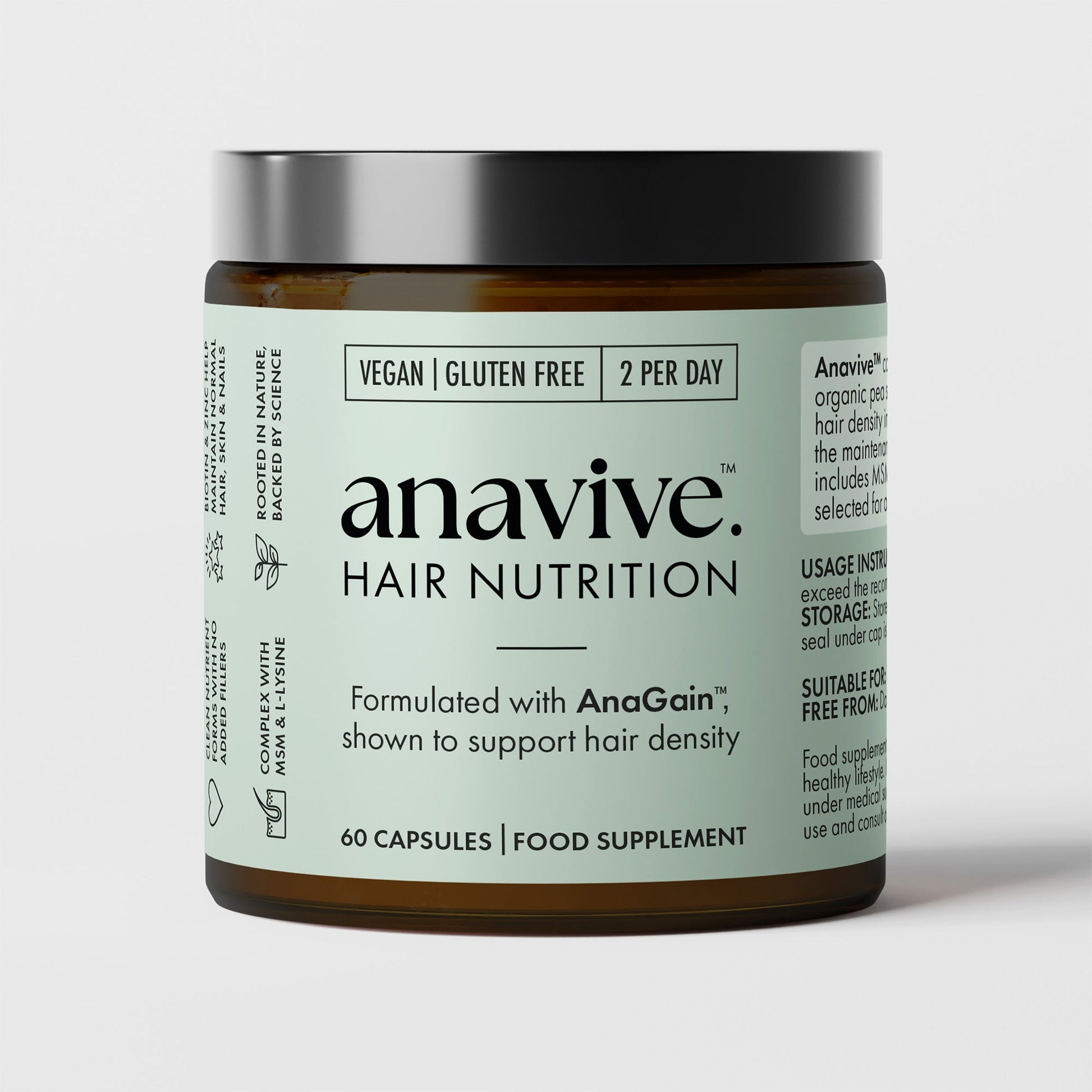
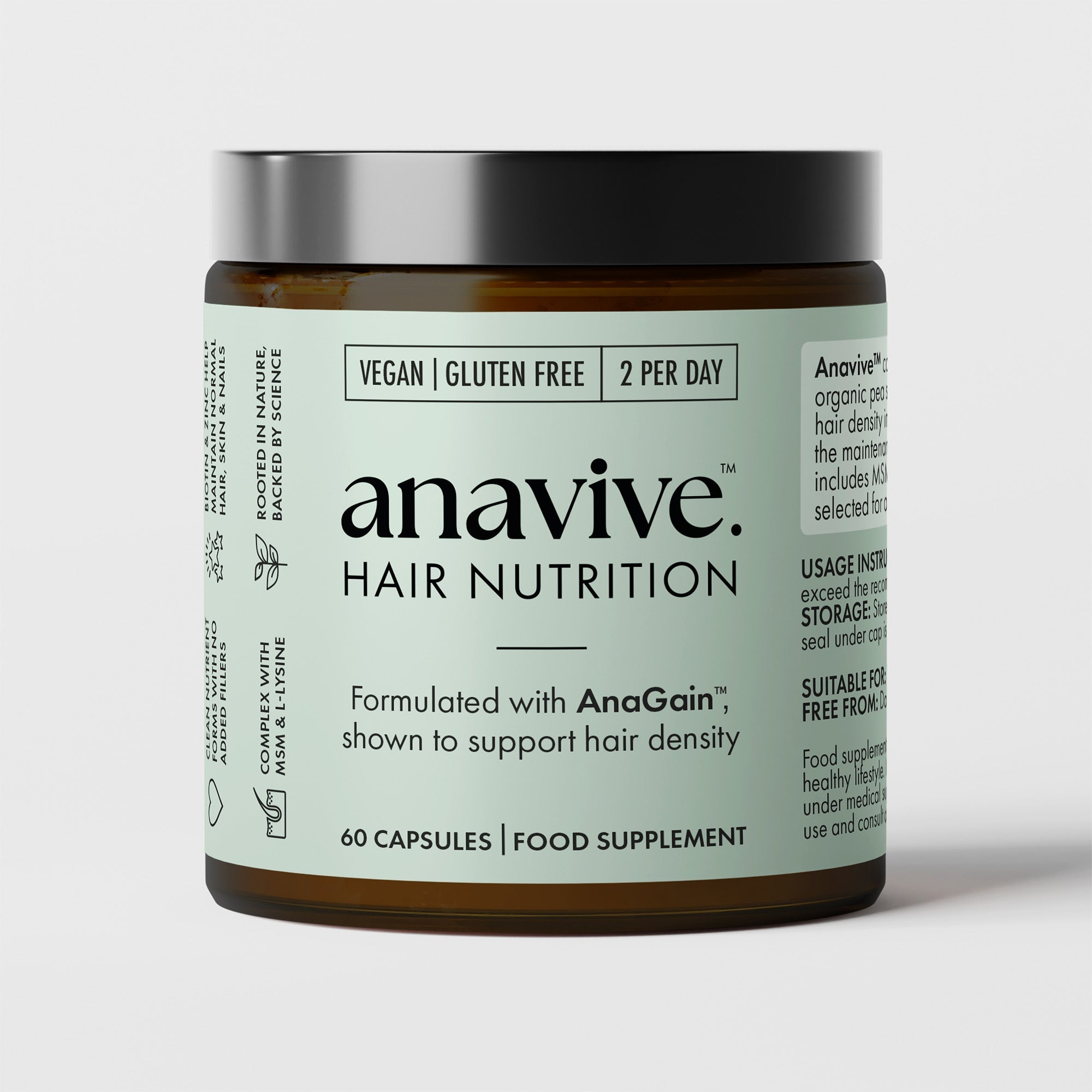
Anavive contains 100mg of AnaGain Nu per daily serving of two capsules. Same grade, same dose as the published oral trial.
We are specific about this for a reason. A supplement can list AnaGain on its label at any quantity, and without a milligram figure there is no way to compare it to the research. Underdosing a branded ingredient so it can appear on a label is a well-established habit in this category. If a product does not state the amount, it is reasonable to ask why.
The full breakdown of every ingredient and its amount is on the Anavive product page.
The timeline in the study
Twenty-one healthy adults of mixed genders, mean age 43.9 years, all losing 100 or more hairs daily at baseline, with a group mean of 163.7 hairs. Each took 100mg of AnaGain Nu daily in a drink of their choice.
Day 0
Baseline hair counts, scalp photographs and questionnaire responses recorded.
Day 28
A 34% reduction in lost hair counts against baseline, described as statistically significant.
Day 56
A 37% reduction against baseline, alongside visibly improved hair density. In the questionnaire, 86% of volunteers reported noticing a reduction in hair loss and 76% wished to continue.
Published in Phytotherapy Research, 2020, volume 34, issue 2, pages 428 to 431.
Why hair timelines are slow regardless
Whatever you take, the hair cycle sets the pace.
Hair grows in three phases. Anagen is the active growth phase and can last several years. Catagen is a short transitional phase. Telogen is the resting phase, at the end of which the hair sheds and a new one begins forming.
Each follicle runs on its own schedule, independently of its neighbours. So a change in follicle signalling does not produce a synchronised visible result. It produces a gradual shift as individual follicles reach the point in their own cycle where the change can register.
Scalp hair grows at roughly a centimetre a month. Even where new growth begins immediately, it takes months to reach a length where you can see it in a mirror rather than only in a photograph.
This is why measured hair counts move before anything looks different, and why photographs taken under consistent lighting are more reliable than your impression in the bathroom.
The practical part: consistency beats timing
Nothing in the research suggests a particular time of day matters. What does matter is taking it daily without gaps, because the mechanism under study is a sustained signalling change rather than an acute effect.
Pick a fixed point in your routine and attach it to something you already do. Anavive is taken as two capsules once a day with a meal.
One note on iron: if you take levothyroxine, separate it from any iron-containing supplement by two to three hours, since iron reduces its absorption. Our iron spotlight covers this.
Tracking it honestly
Take a photograph on day one. Same room, same light source, same time of day, same parting, hair dry. Repeat monthly.
Memory is a poor instrument for gradual change in either direction, which is why the study used photographs and counts rather than asking people how they felt about it. Bad days will feel like decline and good hair days will feel like proof. Neither is data.
Common questions
How much AnaGain should I take per day?
The recommended daily dosage is 100mg, which is the amount used in the published oral trial. Follow the dosage on the product you are using.
How long before I see anything?
The published study measured a change in shed hair counts at 28 days and reported visibly improved density by 56 days. Individual experience will vary, and a measured reduction in shedding is not the same as a visible change in the mirror.
Can I take more than 100mg for faster results?
There is no research on higher doses, so there is no evidence that more produces more, and no safety data at higher intakes. Follow the label.
What happens if I miss a day?
Take the next dose as normal. Do not double up. The relevant thing is the pattern over weeks, not any single day.
How long should I keep taking it?
The study ran 56 days and there is no published data beyond that. Assess at the eight to twelve week mark using photographs rather than impression, and if you are seeing nothing at all by then, that is a reasonable point to reconsider.
Where to read next
- AnaGain for hair growth: what it is, how it works and what the research actually shows
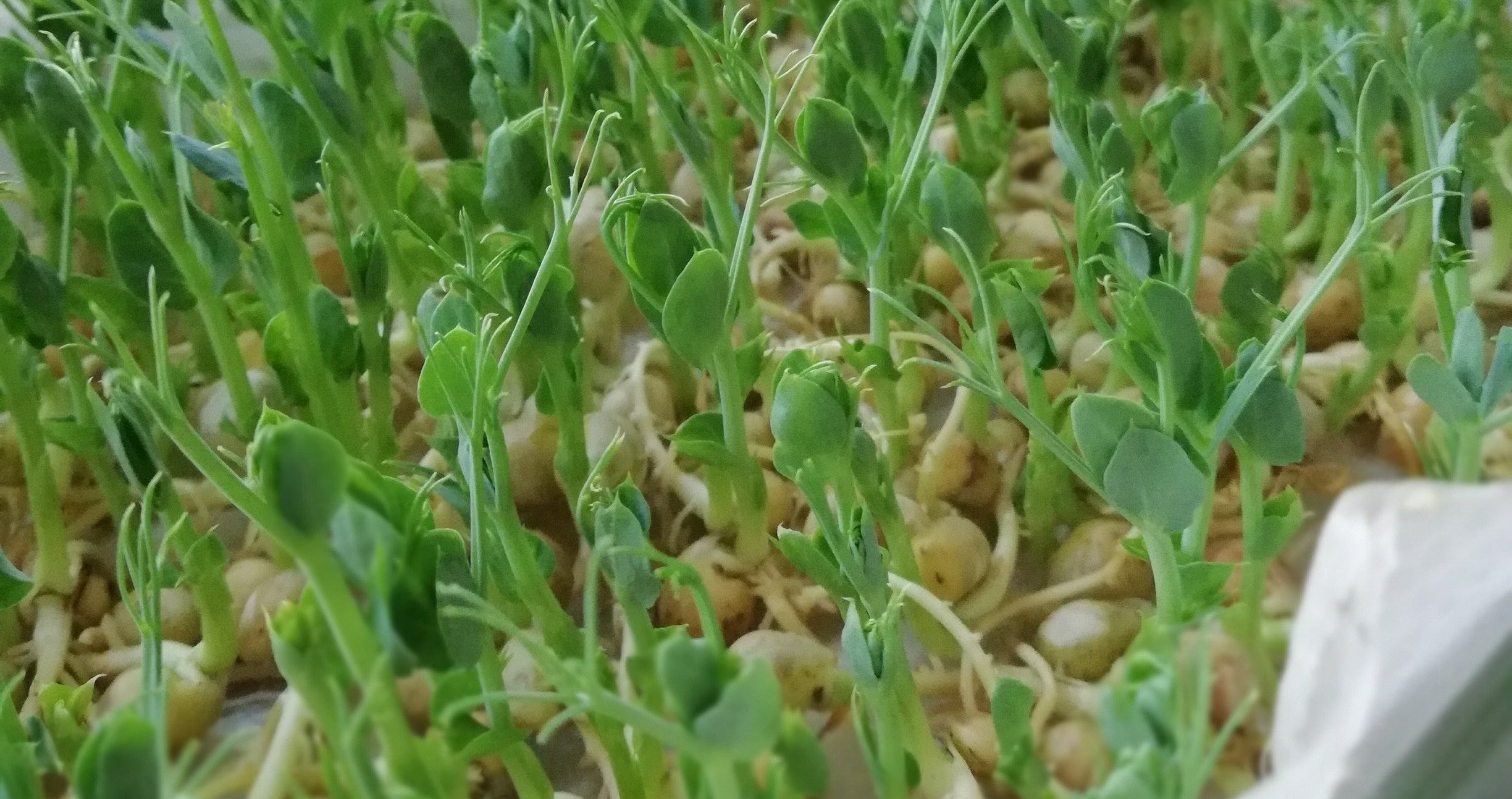
- What is actually in pea sprouts: a complete nutritional guide
- Why 2 in 5 young adults are already thinking about hair loss
Anavive is a food supplement and is not a treatment for any medical condition. If you are experiencing sudden or significant hair loss, speak to your GP.
AnaGain is a trademark of Mibelle AG Biochemistry.