Hair loss used to be something people worried about in their forties and fifties. Not any more. According to YouGov survey data, preventing hair loss is now a stated priority for a significant proportion of young adults, with approximately 2 in 5 people aged 18 to 34 actively taking steps to protect their hair before visible thinning has even started. This is not a niche concern among a handful of anxious people. It is a mainstream shift in how an entire generation thinks about their hair, their health, and what prevention actually looks like.
The question is: are they doing the right things? Because while the instinct to act early is exactly right (dermatologists consistently say that early intervention is three to five times more effective than trying to restore hair after significant loss), a lot of the advice circulating on social media and in beauty marketing is either incomplete, misleading, or focused on selling products rather than solving problems.
This is a practical look at why young adults are increasingly focused on hair loss prevention, what the data says about how they are approaching it, what actually works at this stage, and where most people are leaving the biggest gaps in their strategy.
Why Is This Generation Thinking About Hair Loss So Early?
There are several factors driving this shift, and they go beyond simple vanity.
Hair loss starts earlier than most people realise. Around 16% of men between 18 and 29 already show signs of male pattern baldness. By 35, that figure jumps to roughly two-thirds. For women, the numbers are different but still significant: a 2025 survey of over 7,000 adults found that nearly one quarter of women aged 18 to 65 report that their hair has become noticeably thinner. The idea that hair loss is something that happens "later" simply does not match reality for a large number of people.
Awareness has increased dramatically. Social media has brought hair loss into the open in a way previous generations never experienced. Creators, dermatologists, and trichologists sharing content on TikTok and Instagram have normalised the conversation and made younger audiences aware of warning signs (increased shedding, a wider parting, a shifting hairline) that previous generations would have quietly ignored until it was too late.
The wellness generation thinks preventatively. The 18 to 34 demographic is the same group driving the growth in preventative health more broadly, from gut health supplements to skin barrier routines to annual blood panels. Hair health fits naturally into this mindset. Rather than waiting for a problem and then reacting to it, this generation wants to get ahead of it. And on this point, the data firmly supports their instinct.
The psychological impact is real and well-documented. Research shows that over 60% of men experiencing hair loss feel it affects their self-esteem, with more than 40% believing it reduces their personal attractiveness. A 2025 study found that 78% of women with hair loss experienced shame, anxiety, or depression, with 85% reporting reduced self-esteem. When you know these figures, it makes complete sense that younger people would want to avoid reaching that point entirely.
What Young Adults Are Actually Doing
YouGov data reveals that the 18 to 34 age group is significantly more likely than older demographics to experiment with their hair care routine. They are nearly twice as likely as those over 55 to use hair oils, serums, and masks, and are the most likely age group to try supplements. Around 37% of women and 15% of men report using supplements like biotin or collagen for their hair. Younger women in particular are open to a broad range of interventions, with 61% of Gen Z women and 66% of Millennial women saying they have tried or would try hair growth medications.
But there is also a significant gap between concern and effective action. Over half of people experiencing hair changes have not tried any targeted treatment at all, and more than a third of men admit to having done nothing despite noticing changes. The most common approaches, serums, oils, and over-the-counter products, tend to focus on the hair itself rather than addressing the underlying causes of thinning. And this is where the biggest opportunity for improvement lies.
What Actually Works for Prevention (and What Is Just Noise)
If you are in your twenties or early thirties and want to genuinely protect your hair for the long term, it helps to understand what the evidence supports rather than just following what is trending on social media.
Start with what is happening inside your body, not on top of your head
The single most impactful thing most young adults can do for their hair is ensure they are not deficient in the nutrients their follicles depend on. This is not glamorous advice, and it does not make for viral content, but it is the foundation that everything else is built on.
Nutritional deficiencies are among the most common and most correctable contributors to hair thinning, and they are surprisingly prevalent in younger age groups. Iron deficiency affects up to 30% of premenopausal women. Zinc deficiency is widespread in people whose diets are high in processed foods and low in whole foods. Vitamin D levels in the UK are frequently suboptimal, particularly between October and April. And restrictive diets, whether for weight loss, ethical reasons, or simply the chaotic eating patterns of young adulthood, can create multiple nutrient gaps simultaneously.
The nutrients with the strongest evidence base for hair health include:
Iron - Contributes to normal oxygen transport in the blood. Low ferritin is one of the most common findings in young women experiencing increased shedding. Your follicles are metabolically active tissue that requires consistent oxygen delivery to function. Iron bisglycinate is the most bioavailable supplemental form and is significantly gentler on the stomach than standard ferrous sulphate, which matters for daily long-term use.
Zinc - Contributes to the maintenance of normal hair and normal protein synthesis. Zinc is directly involved in cell division, tissue repair, and the structural proteins your hair is made of. Zinc bisglycinate offers meaningfully better absorption than zinc oxide or zinc sulphate.
Biotin - Contributes to the maintenance of normal hair. Biotin supports keratin production. While severe deficiency is uncommon, suboptimal levels can contribute to weaker, more brittle hair, particularly in people with restricted diets.
Vitamin B6 - Contributes to normal protein and glycogen metabolism. Since hair is primarily made of the protein keratin, B6 supports the metabolic processes that build hair structure. The active form, pyridoxal-5-phosphate (P5P), is more efficiently used by the body than standard pyridoxine.
Vitamin C - Contributes to normal collagen formation for the normal function of skin and increases iron absorption. The dual role of supporting collagen (which provides the structural scaffolding around your follicles) and enhancing iron absorption makes vitamin C a particularly valuable companion nutrient.
Iodine - Contributes to normal thyroid function. Your thyroid regulates your hair growth cycle, and suboptimal iodine intake is more common than most people think, particularly if dairy and seafood consumption is low.
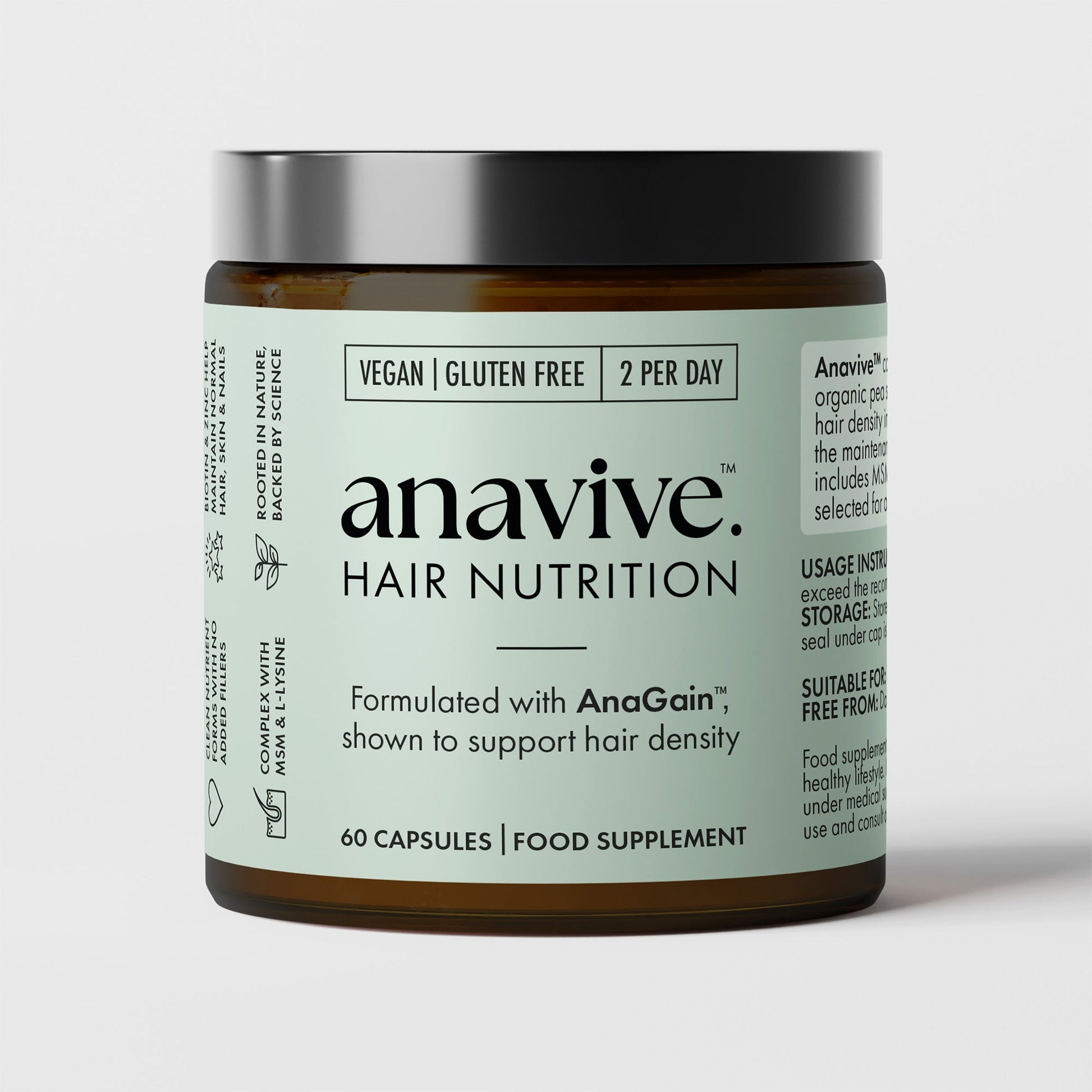
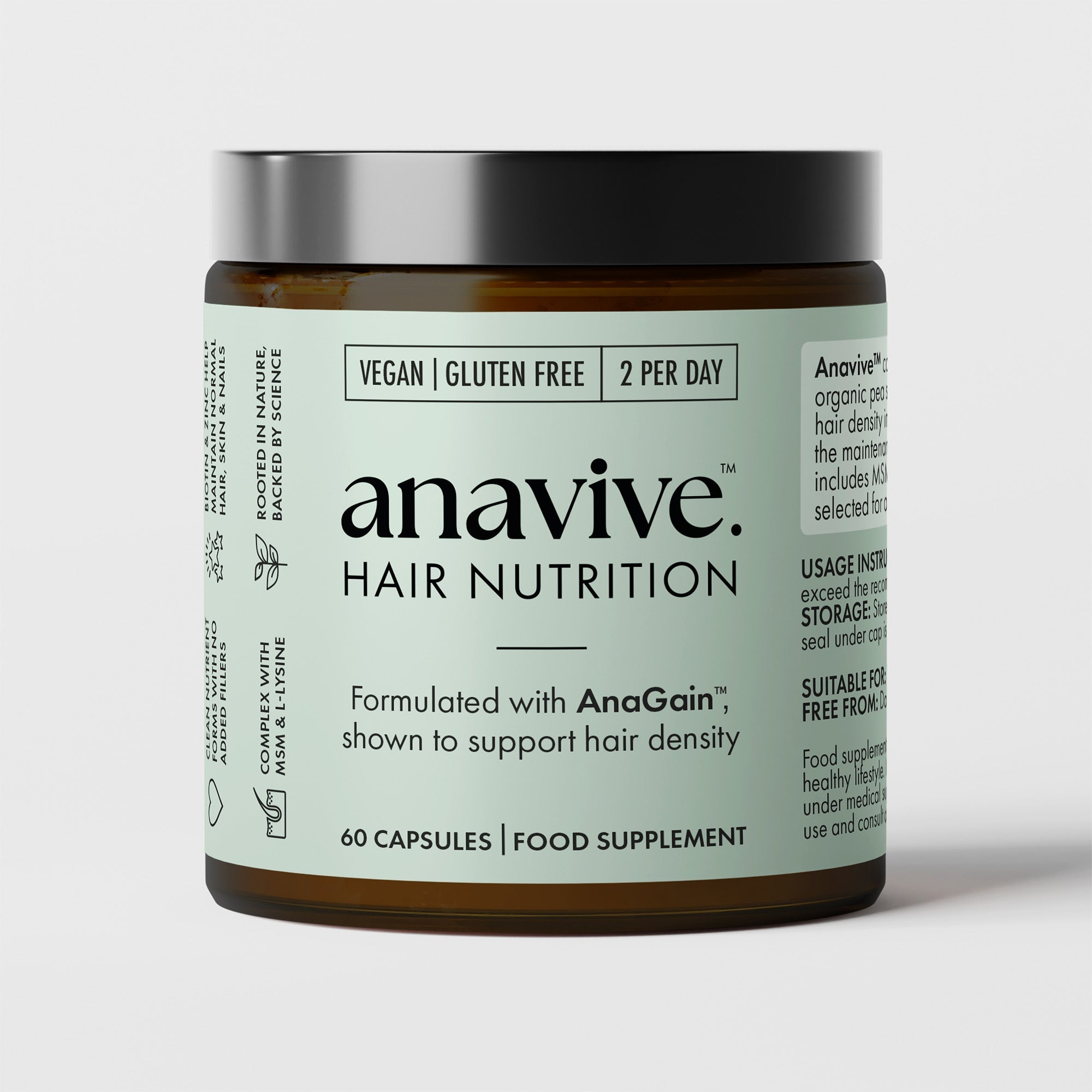
Getting a blood test to check your ferritin, zinc, vitamin D, and thyroid function is one of the most practical preventative steps you can take. If you are not going to do that, at minimum, a well-formulated daily supplement using bioavailable ingredient forms ensures your follicles have the raw materials they need regardless of what your diet looks like on any given day.
Look after your scalp, not just your hair
One positive trend among younger consumers is the growing interest in scalp health. The scalp is skin, and like all skin, it has a microbiome that needs to be kept in balance for your follicles to function properly. The practical steps here are straightforward: use a gentle, sulphate-free shampoo every two to three days to prevent both over-stripping and buildup, avoid layering too many heavy styling products directly on the scalp, and consider occasional scalp exfoliation to support healthy cell turnover.
Ingredients that support scalp circulation, like cayenne pepper extract, and adaptogens like ashwagandha that help manage the stress response (which directly impacts scalp health and hair cycling) address the scalp environment from both outside and in.
Understand when topical treatments have a role
For young adults who are already noticing early signs of thinning, particularly a receding hairline or thinning at the crown, it may be worth discussing pharmaceutical options like minoxidil with a GP or dermatologist. Minoxidil works by increasing blood flow to the follicle and is the only treatment licensed for both male and female pattern hair loss in the UK. Starting it early, before significant miniaturisation has occurred, produces far better outcomes than starting later.
However, pharmaceutical treatments work best when the nutritional foundation is already in place. Increasing blood flow to a follicle that lacks iron, zinc, and the protein building blocks it needs is like watering a plant in poor soil. The treatment helps, but the results are limited by the underlying deficiency.
Build the habit before you need the intervention
The most powerful aspect of starting early is not any single product or treatment. It is the establishment of a consistent, sustainable routine that supports your hair health as a baseline. A daily supplement that covers your key nutrient bases, a gentle scalp care routine, adequate protein intake, stress management, and regular health checks. These are the habits that, compounded over years, make the most significant difference to where your hair is at 35, 45, and beyond.
The people who maintain the most hair density as they age are not the ones who found a miracle product. They are the ones who started a consistent, evidence-based routine early and stuck with it.
What Most Young Adults Get Wrong
Focusing on external products while ignoring internal nutrition. The vast majority of money spent on hair health by 18 to 34 year olds goes toward topical products: serums, oils, masks, and styling treatments. These have a role, but they cannot compensate for a body that is deficient in the nutrients hair needs to grow. The inside-out approach is not an alternative to topical care. It is the prerequisite for topical care to work properly.
Waiting for visible thinning before taking action. By the time hair loss is visible to the naked eye, you have typically already lost around 50% of your hair density in the affected area. The changes happening at the follicle level begin months or years before you notice them in the mirror. If you have a family history of hair loss, starting nutritional support and scalp care in your twenties is not premature. It is strategic.
Following trends instead of evidence. Rice water rinses, rosemary oil applied directly to the scalp, castor oil masks left on overnight. Social media is full of hair growth "hacks" with compelling before-and-after content but minimal scientific backing. Some of these are harmless. Others (like applying undiluted essential oils to the scalp) can actively irritate the scalp and disrupt the microbiome. Prioritise approaches with published evidence over approaches with viral engagement.
Ignoring stress as a genuine factor. Telogen effluvium, the diffuse shedding triggered by physical or emotional stress, is increasingly common in younger adults. University pressure, career stress, financial anxiety, and the general pace of modern life are not trivial factors in hair health. They directly influence your hair growth cycle through cortisol and its downstream effects on follicle function. Treating stress management as a core pillar of hair health, not an afterthought, is one of the most underrated preventative strategies available.
The Bottom Line
The fact that almost 2 in 5 young adults are actively thinking about hair loss prevention is, on the whole, a very positive development. Early intervention works. Prevention is more effective than restoration. And the instinct to get ahead of a problem rather than wait for it to become visible is exactly right.
But the approach matters as much as the intention. The most effective prevention strategy is not a trending product or a viral hack. It is a consistent daily foundation of bioavailable nutrients that your follicles actually need, combined with gentle scalp care, adequate protein, stress management, and the awareness to seek professional advice if you notice early warning signs.
Start with what is happening inside your body. Build the habits now. Be consistent. Your hair in ten years will thank you for the investment you make today.
This article is for informational purposes only and does not constitute medical advice. If you are concerned about hair loss or thinning, please consult your GP or a qualified dermatologist. Nutrient information referenced in this article reflects EFSA-approved health claims where indicated. Individual results from supplementation vary and depend on underlying health status and nutritional needs.