If you're taking a GLP-1 medication like Ozempic, Wegovy, or Mounjaro and you've noticed your hair thinning, you've probably read that it's because of "rapid weight loss" or "nutrient deficiencies." Both of these explanations are true, but they don't tell you the full story. They don't explain why your body suddenly decides that hair is expendable, or what's actually happening at a metabolic level when you're eating less.
Understanding this deeper mechanism matters because it changes how you approach the problem. This isn't just about popping a biotin supplement and hoping for the best. It's about understanding that your body is making calculated resource allocation decisions every single day, and right now, your hair is losing the internal bidding war.
Let's talk about what GLP-1 medications do to your body's protein economy, why your hair follicles are particularly vulnerable to metabolic stress, and what you can actually do about it when you understand the underlying biology.
Your Body's Protein Budget: A Zero-Sum Game
Your body synthesises thousands of different proteins every day. Enzymes, hormones, antibodies, muscle tissue, skin cells, and yes, hair. All of these require amino acids as building blocks, and all of them are competing for the same limited pool of resources.
When you're eating normally and consuming adequate protein, this competition isn't a problem. There's enough to go around. But GLP-1 medications fundamentally alter this equation in several ways:
Reduced appetite means reduced protein intake. You're simply eating less food overall, which means fewer amino acids entering your system. Even if you're consciously trying to eat protein-rich foods, the absolute quantity is often significantly lower than before.
Reduced gastric emptying affects amino acid availability. GLP-1s slow how quickly food moves through your stomach. This is beneficial for blood sugar control and satiety, but it also means that even the protein you do eat is absorbed more slowly and potentially less efficiently. Your body's access to amino acids becomes more sporadic.
Metabolic prioritisation shifts dramatically. When your body senses that resources are scarce (which rapid weight loss absolutely signals), it enters a kind of triage mode. Essential functions get priority. Non-essential functions get deprioritised. Hair falls squarely into the "non-essential" category.
From your body's perspective, this makes perfect evolutionary sense. In times of scarcity, keeping your immune system functional, maintaining muscle mass for survival, and preserving organ function are far more important than growing hair. Your body doesn't care that you're choosing to eat less for health reasons. It just knows resources are limited and acts accordingly.
Why Hair Follicles Are Metabolically Expensive
Here's what most people don't realise: hair follicles are among the most metabolically active tissues in your entire body. They're constantly dividing, constantly building new keratin structures, constantly demanding resources.
A single hair grows roughly 1cm per month. That doesn't sound like much, but at a cellular level, it represents an enormous amount of protein synthesis happening continuously. Your scalp has around 100,000 follicles, and in a healthy state, about 85-90% of them are actively growing at any given time. That's tens of thousands of microscopic protein factories running simultaneously, 24 hours a day.
This metabolic demand makes follicles exquisitely sensitive to resource availability. When amino acid levels drop, when micronutrient cofactors become scarce, or when your body decides to redirect resources elsewhere, hair follicles are among the first to feel it.
The mechanism is elegant in its simplicity: follicles that don't have adequate resources to maintain the growth phase simply... stop. They shift into the resting (telogen) phase prematurely, and a few months later, those hairs shed. This is telogen effluvium, and it's not a malfunction. It's your body making a rational decision about where to allocate scarce resources.
The Amino Acid Hierarchy: Why Some Matter More Than Others
Not all amino acids are created equal when it comes to hair health, and understanding this hierarchy helps explain why simply eating "more protein" isn't always sufficient.
L-lysine is particularly important. It's an essential amino acid (meaning your body cannot synthesise it and must obtain it from food) that plays a specific role in hair follicle function. Research suggests it may help improve iron absorption and utilisation, which is relevant because iron deficiency is one of the most common triggers for hair shedding. When you're eating significantly less food, lysine intake often drops substantially.
Cysteine and methionine are sulphur-containing amino acids that are direct building blocks of keratin, the protein that makes up your hair shaft. Without adequate sulphur-containing amino acids, your body cannot produce strong, resilient keratin structures. This is where ingredients like MSM (methylsulfonylmethane) become relevant, as they provide bioavailable sulphur.
The branched-chain amino acids (leucine, isoleucine, valine) are critical for protein synthesis regulation. They don't just provide building blocks; they actually signal to your body that protein synthesis should occur. When these are low, your body's overall protein-building machinery slows down.
The problem on GLP-1 medications is that you're often not just mildly low in these amino acids. You're substantially below optimal levels because you're eating perhaps half the volume of food you were previously consuming. Even if you're choosing protein-rich foods, the absolute quantity may still be inadequate for the metabolic demands of your body plus your hair.
The Micronutrient Cofactor Crisis
Amino acids are only half the story. Even if you had perfect amino acid availability, your body still couldn't synthesise keratin effectively without the right micronutrient cofactors. These are the vitamins and minerals that enable the enzymatic reactions required for protein synthesis.
Iron doesn't just prevent anaemia. It's a cofactor for enzymes involved in DNA synthesis and cell division. Follicles are rapidly dividing tissues, and when iron levels drop (even subclinically, before you're technically anaemic), follicle function is compromised. The form matters enormously here: iron bisglycinate is absorbed far more efficiently than cheap ferrous sulphate, which means you need less of it to achieve the same effect and it's gentler on your digestive system.
Zinc contributes to normal protein synthesis. That's not marketing language; it's a recognised EFSA health claim because the evidence is robust. Zinc is a cofactor for over 300 enzymes, many of which are involved in protein metabolism. Without adequate zinc, your body's ability to convert amino acids into functional proteins is impaired. Again, form matters: zinc bisglycinate is vastly superior to zinc oxide.
Vitamin B6 in its active form (pyridoxal-5-phosphate) is essential for amino acid metabolism. Standard B6 (pyridoxine) needs to be converted by your liver into P5P before your body can use it. When you're under metabolic stress from rapid weight loss, that conversion may be less efficient. Using the active form bypasses this step entirely.
Biotin contributes to normal hair maintenance. It's involved in the production of keratin, and whilst true biotin deficiency is uncommon in the general population, reduced food intake can meaningfully lower your levels. This is particularly relevant if you're also eating fewer eggs, nuts, and other biotin-rich foods due to reduced appetite.
The critical point is this: you need all of these working together. Having adequate iron but low zinc doesn't help. Having good B6 status but poor iron levels doesn't help. Hair follicles need the complete metabolic environment to function optimally, and GLP-1-related appetite suppression undermines that environment systematically.
The Stress Response Amplification
There's another layer to this that often gets overlooked: the physiological stress response itself.
Rapid weight loss isn't just a nutritional challenge. It's a metabolic stressor that elevates cortisol. Your body interprets significant, rapid fat loss as a potential survival threat. Cortisol levels rise as part of this adaptive response, and elevated cortisol has direct effects on hair follicles.
Research shows that chronic stress and elevated cortisol can push hair follicles prematurely into the telogen (resting) phase. This is separate from the nutritional depletion mechanism, though the two work synergistically to create the perfect storm for hair shedding.
This is where adaptogens like ashwagandha become relevant. These aren't miracle cures, but some research suggests they may help modulate the body's cortisol response and support resilience to physiological stress. When you're already dealing with the metabolic stress of rapid weight loss, supporting your body's stress-management systems makes biological sense.
Why Timing Matters: The Three-Month Delay
One of the most confusing aspects of GLP-1-related hair loss is the lag time. You start the medication, you begin losing weight, everything seems fine, and then suddenly three or four months later, your hair starts shedding dramatically. Why the delay?
This is due to the hair growth cycle itself. When a follicle shifts from the growth (anagen) phase to the resting (telogen) phase, the hair doesn't fall out immediately. It stays in the follicle for another 2-4 months before shedding. This means the hair you're losing today represents follicles that were stressed months ago, typically when your weight loss was most rapid and your nutritional intake was most compromised.
Understanding this timeline is important for two reasons:
First, it explains why you can't immediately stop the shedding once it starts. Those hairs are already committed to falling out. You're not trying to save the hairs that are currently shedding. You're trying to support the follicles that are still in the growth phase so they don't prematurely shift into resting.
Second, it reinforces why early intervention matters. If you wait until you're experiencing heavy shedding to address the nutritional side, you've already missed the window to prevent that wave. The most effective approach is to start supporting your nutritional status from the beginning of GLP-1 treatment, ideally before significant shedding begins.
The Recovery Phase: What Your Body Needs to Rebuild
Eventually, your weight stabilises. Your body adapts to its new metabolic baseline. The rapid-loss phase ends. At this point, the question becomes: what does your body need to shift those follicles back into active growth?
The answer is the same resources it needed all along, but now you're trying to support regrowth rather than just minimise shedding. This is where consistency with high-quality, bioavailable nutrients becomes critical.
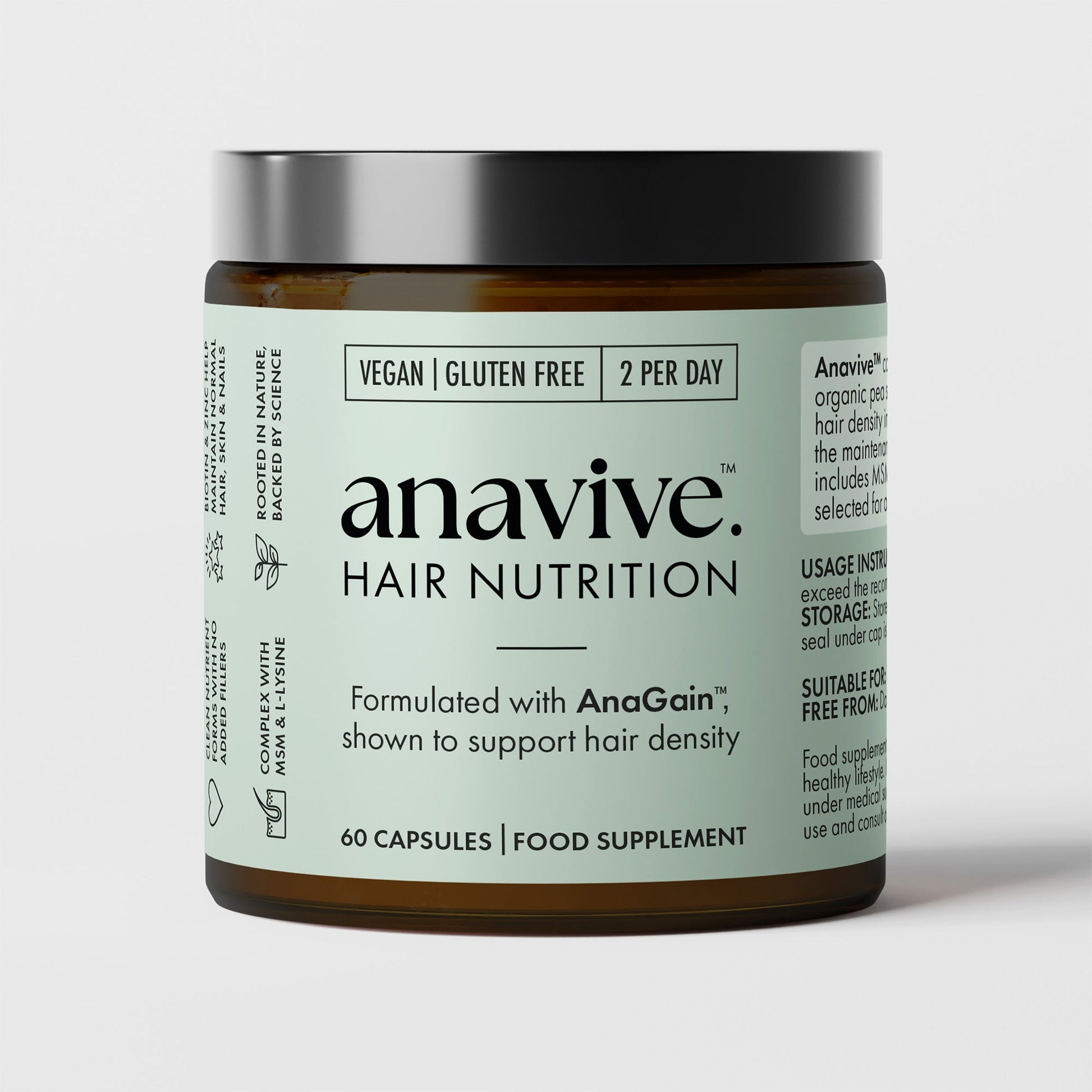
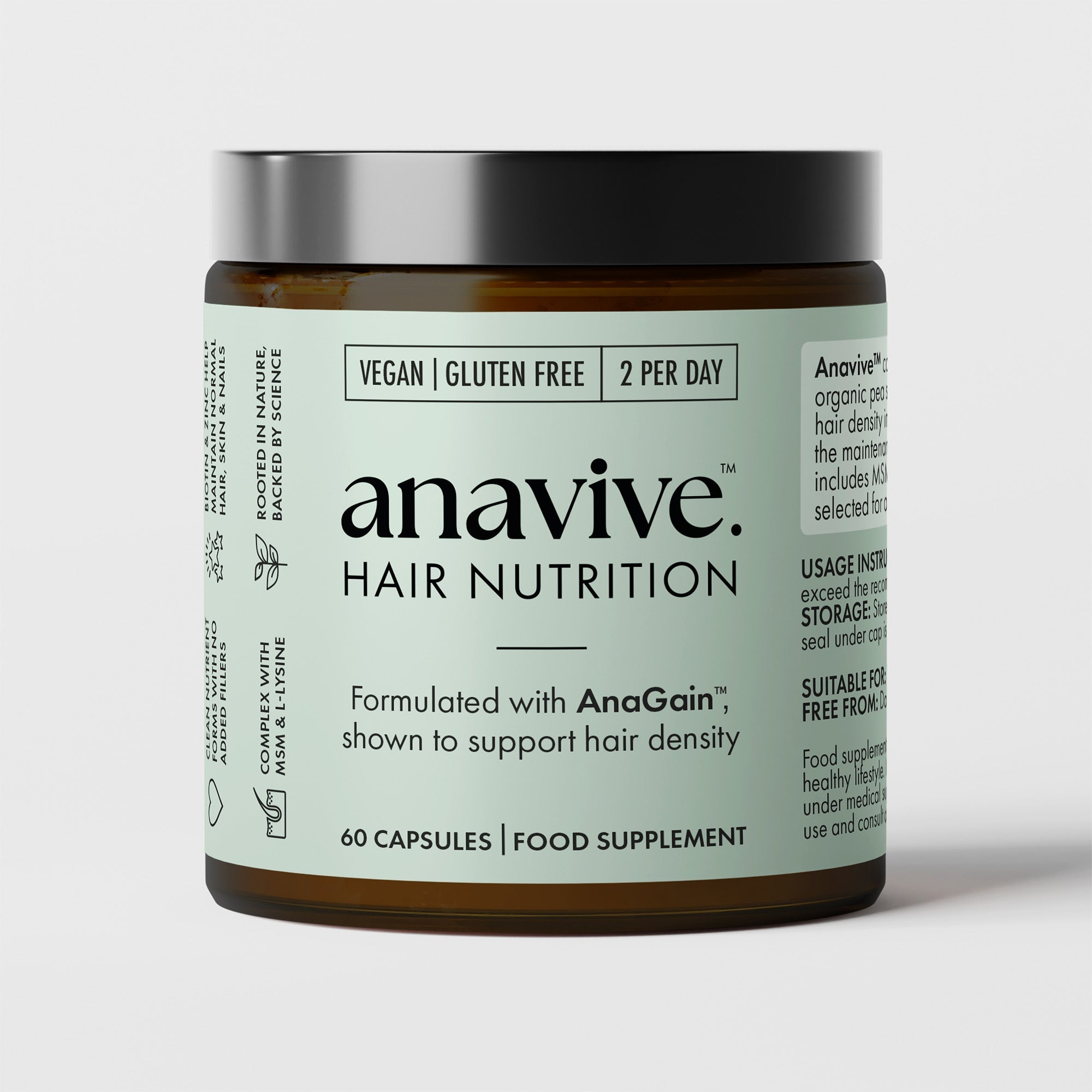
Your follicles need a sustained supply of amino acids (particularly lysine, cysteine, and methionine), adequate iron and zinc in forms your body can actually absorb, B vitamins in their active forms, and compounds like AnaGain™ pea shoot extract that have been studied specifically for their effects on the hair growth cycle.
AnaGain™ works by stimulating Noggin (a protein that shortens the resting phase) and FGF7 (which promotes the initiation of new growth). Clinical studies show it can increase the ratio of actively growing to resting hairs by 78%. This isn't about preventing the initial shedding. It's about helping follicles transition back into growth mode more efficiently during the recovery phase.
What This Means Practically
Understanding the metabolic mechanisms behind GLP-1 hair loss changes how you approach it:
Start supplementation early, ideally when you begin the medication, not when shedding starts. You're trying to prevent metabolic stress to follicles, which means maintaining adequate nutrient status throughout the weight loss phase.
Choose bioavailable forms. This isn't optional. Cheap iron oxide won't help if your body can't absorb it efficiently. Cheap zinc oxide won't support protein synthesis if you excrete most of it. Quality genuinely matters here because you're already dealing with reduced nutrient intake.
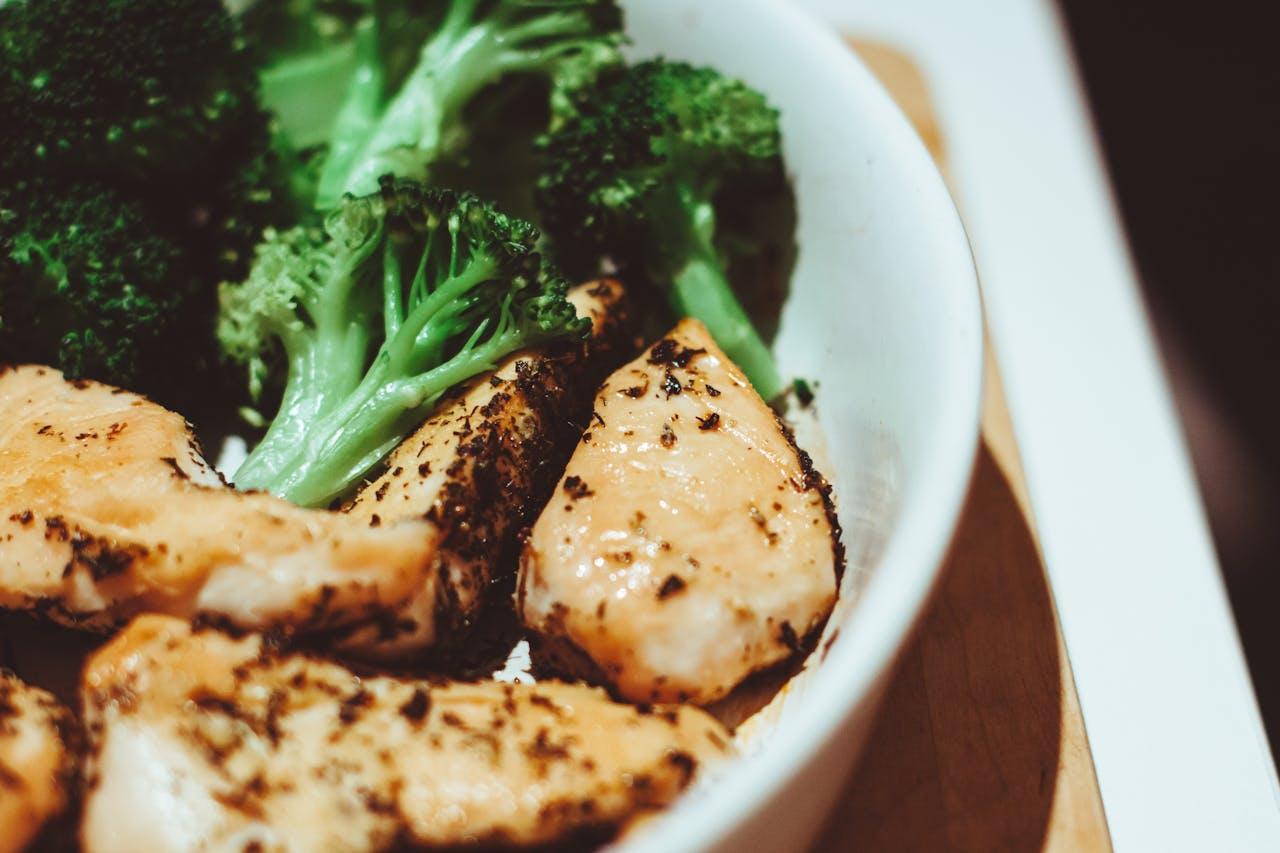
Prioritise protein intake relentlessly. Even on reduced calories, aim for at least 1.2g of protein per kilogram of body weight. If you can't achieve this through food (which is common given appetite suppression), targeted amino acid supplementation can help bridge the gap.
Be consistent for months, not weeks. Hair grows slowly. Follicles need sustained support over months to shift from resting back to growth. Sporadic supplementation won't work because you're not providing the consistent metabolic environment that healthy hair growth requires.
Track your progress objectively. Take photos in the same lighting every 6-8 weeks. Your day-to-day perception is unreliable and will drive you mad. Photos provide evidence of whether regrowth is occurring, even when it feels invisible.
The Honest Reality
GLP-1 medications are producing remarkable results for weight management and metabolic health. But they create a metabolic environment where hair follicles struggle because they're metabolically expensive, non-essential tissues competing for resources that have suddenly become scarce.
You cannot completely prevent this effect whilst aggressively losing weight. But you can minimise it, and you can support your body's recovery, by understanding what's actually happening at a metabolic level and addressing it systematically.
Your hair isn't failing you. Your body is making rational allocation decisions in a resource-constrained environment. Your job is to ensure that environment has the building blocks and cofactors it needs so that when your weight stabilises, your follicles can return to healthy function as quickly as possible.
That requires quality nutrition, bioavailable supplementation, consistency, and patience. There are no shortcuts. But there is a biologically sound path forward.