You've noticed it gradually. The parting seems wider. Your ponytail feels thinner. More hair in the brush than there used to be. You're not imagining it, and no, it's not just ageing. If you're in your 40s or early 50s, there's a very good chance perimenopause is playing a role in what's happening to your hair.
Perimenopause gets far less attention than menopause itself, yet this transitional phase can last anywhere from four to ten years. During that time, fluctuating hormones don't just cause hot flushes and mood swings. They can fundamentally alter your hair growth cycle, leading to thinning that feels frustratingly out of your control.
Let's talk about what's actually happening, why conventional advice often misses the mark, and what you can realistically do about it.
What Perimenopause Does to Your Hair
Your hair growth cycle has three phases: anagen (growth), catagen (transition), and telogen (rest and shedding). In a healthy cycle, about 85-90% of your hair is actively growing at any given time. Perimenopause disrupts this balance in several ways.
First, oestrogen levels become erratic. Oestrogen helps prolong the anagen phase, keeping more hairs in active growth for longer. As oestrogen declines and fluctuates during perimenopause, the growth phase shortens. Hairs spend less time growing and more time resting, which means more shedding and less density over time.
Second, the ratio between oestrogen and androgens (male hormones like testosterone) shifts. You're not necessarily producing more androgens, but with less oestrogen to balance them out, their effects become more pronounced. This can lead to a pattern called female pattern hair loss, where the crown and parting gradually thin whilst the hairline typically remains intact.
Third, progesterone levels drop. Progesterone has anti-androgenic properties, meaning it helps counteract the hair-thinning effects of testosterone. Less progesterone means androgens have freer rein to miniaturise hair follicles, particularly at the crown.
The result? Thinner individual strands, reduced overall density, and a growth rate that feels frustratingly slow compared to your 20s and 30s.
Why It's Not Just About Hormones
Whilst hormonal shifts are the primary driver, perimenopause rarely happens in isolation. By your 40s and 50s, you're likely dealing with accumulated stress, potential nutrient depletion, thyroid changes, and the simple reality that hair follicles age just like the rest of you.
The Thyroid Connection
Thyroid function often shifts during perimenopause, and hypothyroidism (underactive thyroid) is a common but under-diagnosed cause of hair thinning in women. If you're also experiencing unexplained weight gain, persistent fatigue, feeling cold, or dry skin, it's worth asking your GP for a full thyroid panel, not just TSH.
Iron and Ferritin Levels
Many perimenopausal women have low iron stores, particularly if you're experiencing heavier or more frequent periods, which is common during this phase. Even if you're not clinically anaemic, ferritin levels below 40-50 µg/L can impair hair growth. Hair follicles are highly metabolically active and need adequate iron for proper function.
Chronic Stress
By midlife, you're often managing multiple demands: career, ageing parents, teenagers, financial pressures. Chronic stress elevates cortisol, which can push more hairs into the shedding phase and inhibit growth. It's also been shown to potentially accelerate the depletion of hair follicle stem cells.
What Most Advice Gets Wrong
If you've Googled perimenopausal hair loss, you've probably seen the standard recommendations: eat more protein, reduce stress, use gentle products. None of this is wrong, but it's frustratingly surface-level.
Here's what often gets missed:
Quality matters more than quantity with nutrition. You can eat plenty of iron-rich foods, but if you're consuming poorly absorbed forms or pairing them with substances that inhibit absorption (like tea with meals), you're not getting the benefit. The same applies to zinc and other minerals essential for hair health.
Topical treatments have limitations. Serums and scalp treatments can support a healthy environment, but they can't override systemic hormonal changes. If your hair follicles are receiving signals from declining oestrogen and elevated androgens, a topical product has limited ability to counteract that.
You can't spot-treat hormonal hair loss. This isn't a localised problem. It requires a whole-body approach that addresses the underlying hormonal shifts, nutritional status, and inflammatory environment.
Your Realistic Action Plan
There's no magic bullet for perimenopausal hair thinning, but there are evidence-based steps that can make a meaningful difference. The key is consistency and realistic expectations. You're not aiming to restore your 25-year-old hair. You're aiming to optimise what's possible given your current hormonal landscape.
Step One: Get Your Levels Checked
Before doing anything else, book a GP appointment and request blood tests for:
- Full thyroid panel (TSH, T4, T3, thyroid antibodies)
- Ferritin (iron stores)
- Full blood count (to check for anaemia)
- Vitamin D
- Vitamin B12
If your GP is hesitant, be clear that you're experiencing hair thinning and want to rule out deficiencies. These tests provide a baseline and might reveal issues that are straightforward to address.
Step Two: Consider HRT
Hormone replacement therapy isn't just for hot flushes. By restoring oestrogen and progesterone levels, HRT can help stabilise the hair growth cycle and reduce the androgenic effects that contribute to thinning. Body-identical HRT, delivered through patches or gel, is generally considered the safest and most effective option.
Not everyone is a candidate for HRT, and it's not a decision to take lightly. But if you're struggling with multiple perimenopausal symptoms and hair loss is one of them, it's worth having an informed conversation with a menopause specialist. The benefits for hair often become apparent within 6-12 months of starting treatment.
Step Three: Optimise Your Nutrition
Your hair is made of keratin, a protein that requires not just adequate protein intake but also specific vitamins and minerals to synthesise effectively. During perimenopause, when your body is under hormonal stress, these requirements may actually increase.
Focus on:
High-quality protein sources. Aim for at least 1-1.2g of protein per kilogram of body weight daily. Include eggs, fish, poultry, legumes, and Greek yoghurt.
Bioavailable iron. If your ferritin is low, dietary sources alone may not be enough. Bisglycinate forms of iron are far better absorbed and cause fewer digestive issues than ferrous sulphate or oxide forms.
Zinc and copper in balance. Zinc contributes to normal protein synthesis, which includes the keratin in your hair. However, too much zinc can deplete copper, so they need to be balanced. Glycinate forms are well absorbed and gentle on the stomach.
Biotin and B vitamins. Biotin contributes to the maintenance of normal hair. B6, in its active form (pyridoxal 5-phosphate), supports overall metabolic function and can help with hormonal balance.
Vitamin C. Not only does it support collagen production, but it also enhances iron absorption when taken together. Calcium ascorbate is a buffered, non-acidic form that's easier on the stomach.
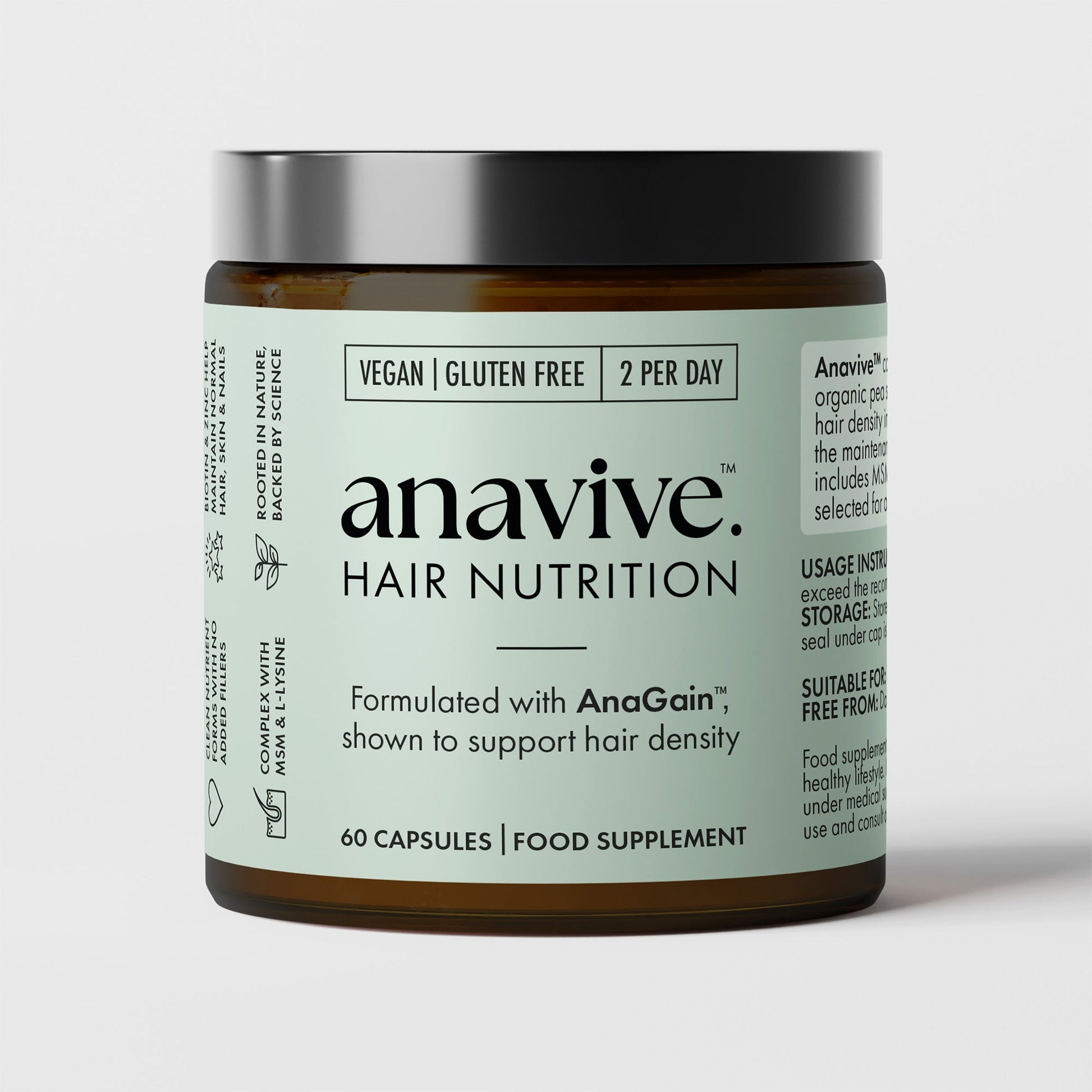
The challenge is getting therapeutic amounts of these nutrients consistently through diet alone, particularly when you're dealing with the energy fluctuations and appetite changes that often accompany perimenopause. This is where targeted supplementation can help bridge the gap, but quality matters enormously. Cheap multivitamins often use poorly absorbed forms that you'll largely excrete.
Step Four: Support Your Stress Response
You can't eliminate stress, but you can change how your body responds to it. Adaptogenic herbs like ashwagandha have traditionally been used to help modulate the stress response and support hormonal balance. Some research suggests it may help reduce cortisol levels, though evidence is still emerging.
Equally important: sleep, movement, and boundaries. Hair grows whilst you sleep, specifically during deep sleep phases. Chronic sleep deprivation disrupts growth hormone production and increases inflammatory markers, both of which affect hair health.
Step Five: Be Strategic With Hair Care
Perimenopausal hair is more fragile. The individual strands are often finer, and the scalp may be drier due to reduced sebum production. Adjust accordingly:
- Wash less frequently if possible, using sulphate-free shampoos that won't strip natural oils
- Avoid tight hairstyles that create tension on the hairline and crown
- Minimise heat styling, and always use a heat protectant when you do
- Consider a silk pillowcase to reduce friction-related breakage overnight
- If you colour your hair, space out treatments and use bond-building treatments to minimise damage
None of this will reverse hormonal thinning on its own, but it prevents additional, avoidable damage.
Step Six: Consider Evidence-Based Topicals
Minoxidil (Regaine) is the only topical treatment with robust evidence for female pattern hair loss. The 5% foam formulation has been shown to be more effective than 2%, though some women experience scalp irritation. It requires consistent, long-term use, and shedding often increases initially before improvement is seen at around 4-6 months.
Caffeine-based serums and peptides have some promising preliminary research, though evidence is less conclusive. If you choose to try these, give them at least 3-4 months before assessing effectiveness.
What About Growth Timelines?
Here's the frustrating reality: hair grows slowly. Even under optimal conditions, you're looking at roughly 1cm per month. Seeing meaningful improvement in density and thickness typically takes 4-6 months minimum, often longer.
If you're addressing nutritional deficiencies, you might notice reduced shedding within 6-8 weeks. Actual regrowth and improved thickness usually becomes apparent around the 4-6 month mark. This requires patience and consistency, which is difficult when you're looking in the mirror every day.
Track progress with photos taken in the same lighting, same parting, every 6-8 weeks. Your perception day-to-day is unreliable. Photos don't lie.
When to Seek Specialist Help
If you've addressed the basics, given it 6-12 months, and you're still seeing significant thinning or shedding, consider seeing a trichologist or dermatologist who specialises in hair loss. They can perform a scalp examination, potentially a biopsy, and rule out conditions like frontal fibrosing alopecia or lichen planopilaris, which can occur during perimenopause and require specific treatment.
The Uncomfortable Truth
Some degree of hair thinning during perimenopause is normal and expected. Not every woman will restore her pre-perimenopausal density, particularly if there's a strong genetic component to female pattern hair loss in your family. The goal isn't to fight against inevitable biological processes, but to optimise your hair health within the reality of hormonal ageing.
This doesn't mean accepting something that distresses you. It means being realistic about timelines, understanding that improvement may be gradual rather than dramatic, and recognising that what works varies enormously between individuals.
Your hair is changing because your body is changing. That's not a failure. But you're not powerless either. Thoughtful intervention, consistency, and patience can make a tangible difference to how you navigate this transition.