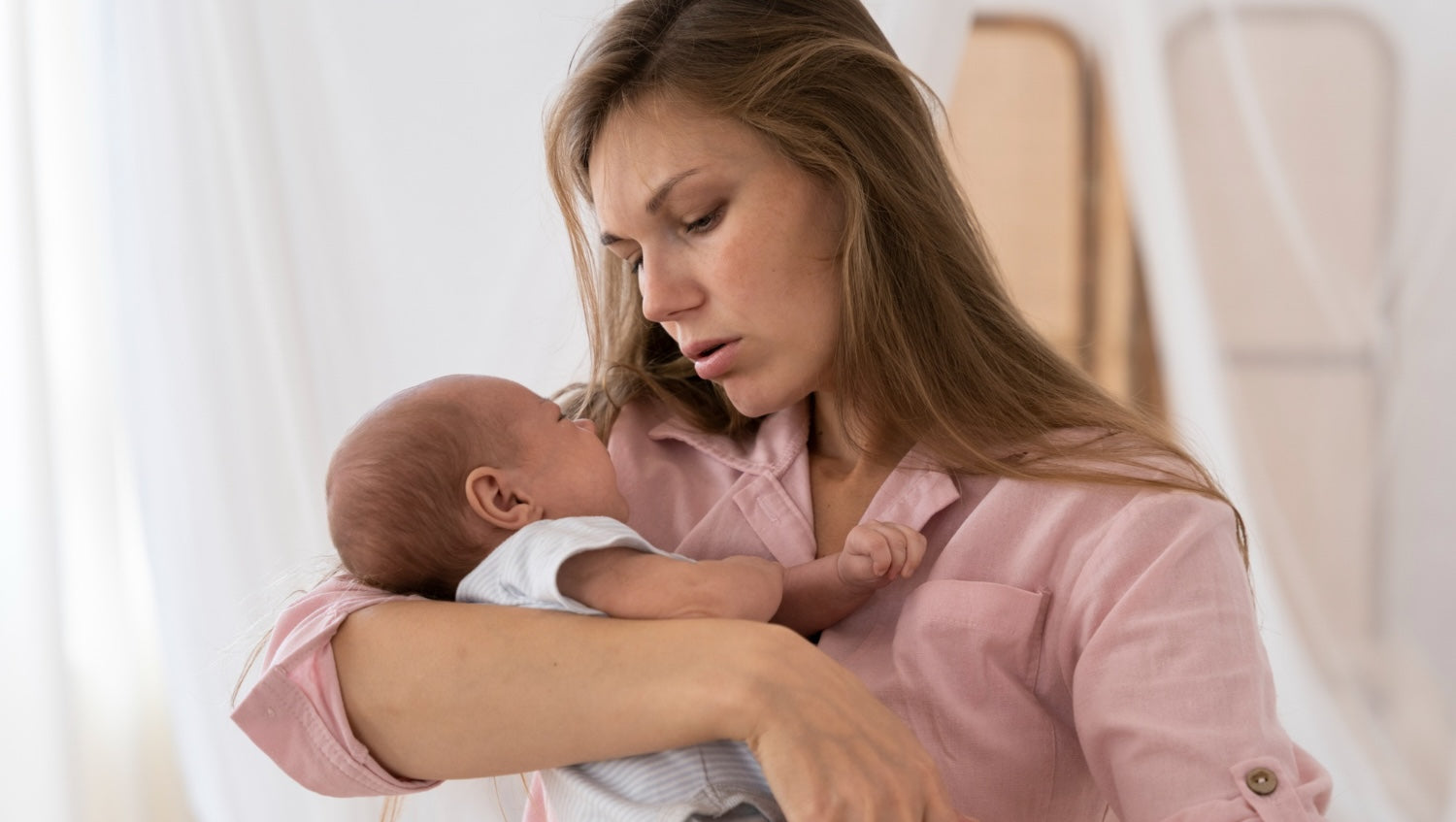
You've made it through pregnancy, labour, and those first bewildering weeks with a newborn. You're starting to find your rhythm. Then one morning in the shower, you notice it: clumps of hair circling the drain. Handfuls coming away when you brush. A widening parting that wasn't there before.
If this sounds familiar, you're not imagining it, and you're certainly not alone. Postpartum hair loss affects up to 90% of new mothers, yet somehow nobody warns you about it in those antenatal classes. Let's talk about what's actually happening, when it becomes a concern, and what you can realistically do about it.
Why Does Postpartum Hair Loss Happen?
During pregnancy, elevated oestrogen levels do something rather lovely: they extend your hair's growth phase. Hairs that would normally shed just... don't. You might have noticed your hair looking thicker, shinier, more abundant than usual whilst you were pregnant. That wasn't your imagination either.
The trouble starts after delivery. Oestrogen levels plummet rapidly, and all those hairs that were hanging on for dear life suddenly get the signal to shed. It's called telogen effluvium, and whilst it sounds alarming, it's essentially your hair cycle playing catch-up.
Think of it like this: if you normally lose 50-100 hairs per day, you might have been losing only 30-40 during pregnancy. After birth, you're not just losing today's quota, you're also shedding the backlog from nine months of retention. The maths is brutal, but it's temporary.
The Postpartum Hair Loss Timeline: What to Expect
Here's what typically happens, though remember that every woman's experience varies:
Months 1-2 Postpartum
Usually quiet. Your hormones are still readjusting, and the shedding phase hasn't properly kicked in yet. You might notice your hair feels different, perhaps drier or frizzier, but major loss is uncommon this early.
Months 3-4 Postpartum
This is typically when it starts. You'll notice increased shedding in the shower, on your pillow, caught in your hairbrush. The hairline and temples are often most affected, sometimes creating a receding appearance that can feel quite distressing.
Months 5-6 Postpartum
Often the peak period. Shedding can feel relentless. You might find yourself hoovering twice as often or avoiding dark clothing because the fallen hairs are so visible. This is usually the worst of it.
Months 7-12 Postpartum
The shedding should gradually slow. You might start noticing baby hairs, those short wispy bits around your hairline that signal regrowth. By around 12 months postpartum, most women find their hair has returned to its pre-pregnancy density.
When Postpartum Hair Loss Isn't Normal
Whilst some degree of shedding is expected, there are signs that something else might be going on:
Shedding that continues heavily past 12 months postpartum. Some extended loss is normal, but if you're still pulling out significant amounts at 15-18 months, it's worth investigating further.
Bald patches or very sudden, localised loss. Postpartum telogen effluvium causes diffuse thinning, not distinct bald spots. Patches might indicate alopecia areata or another condition.
Hair loss accompanied by extreme fatigue, weight changes, or feeling cold all the time. These could signal thyroid issues, which are surprisingly common postpartum and often go undiagnosed.
Hair that breaks off rather than sheds from the root. If you're seeing short, broken hairs rather than full-length strands with a tiny white bulb at the end, you're dealing with breakage, not normal postpartum shedding.
If any of these apply, book an appointment with your GP. A simple blood test can check your thyroid function, iron levels, and other markers that affect hair health. There's no shame in getting checked, especially when you're already navigating the chaos of new motherhood.
What You Can Actually Do About It
Here's the frustrating truth: you can't stop postpartum hair loss entirely. It's a physiological process that needs to run its course. But you can support your body through it and potentially minimise the impact.
Be Gentle With Your Hair
This isn't the time for tight ponytails, aggressive brushing, or daily heat styling. Use a wide-toothed comb on wet hair, avoid pulling it back into the same style repeatedly (which can worsen temple thinning), and let it air-dry when possible. Think of your hair as being in a vulnerable state, because it is.
Nutrition Matters More Than You Think
Growing, birthing, and feeding a baby is extraordinarily depleting. Your body's been putting that baby first for months, and your nutrient stores might be running on empty. Hair is made of protein, specifically keratin, which requires adequate protein intake and specific vitamins and minerals to synthesise properly.
Iron is particularly important. Even if you're not technically anaemic, suboptimal iron levels (ferritin below 40-50 µg/L) can trigger hair loss. Biotin contributes to the maintenance of normal hair, whilst zinc plays a role in normal protein synthesis. These aren't miracle cures, but they're foundations.
The challenge? Getting optimal nutrition when you're surviving on broken sleep and grabbed meals. This is where thoughtful supplementation can help bridge the gap. Look for formulations that use highly absorbable forms of nutrients, not just the cheapest options that create expensive urine. Bisglycinate forms of iron and zinc, for instance, are far more bioavailable than oxide forms.
Consider Your Scalp Health
A healthy scalp environment supports better regrowth. If your scalp feels dry, itchy, or irritated, that inflammation can potentially impact the hair cycle. Some women find that ingredients like cayenne pepper extract (which supports scalp circulation) or silica from bamboo extract can be helpful, though individual responses vary.
Manage Stress (Easier Said Than Done)
Yes, telling a new mother to reduce stress is almost laughable. But chronic stress can prolong telogen effluvium and trigger additional shedding. Adaptogenic herbs like ashwagandha have been traditionally used to help the body manage stress responses, though you should check with your GP if you're breastfeeding before taking any supplements.
What About Topical Treatments?
You'll find countless serums, oils, and treatments marketed for postpartum hair loss. Some contain ingredients like caffeine, peptides, or plant extracts that might support the scalp environment. The evidence is mixed, and they're unlikely to stop the shedding phase that's hormonally driven.
That said, if a product makes you feel like you're doing something positive and doesn't cause irritation, there's value in that. Just be wary of anything making dramatic promises or costing a fortune.
The Regrowth Phase: What to Expect
Once the shedding slows, you'll start seeing regrowth. Those baby hairs can look a bit wild at first, sticking up around your hairline like a fuzzy halo. It takes time for them to gain length and blend with the rest of your hair.
Some women find their hair texture changes after pregnancy. Straight hair might develop wave, thick hair might thin slightly, curly hair might loosen. This is normal and reflects the hormonal shifts your body has undergone.
Looking After Yourself
Here's what often goes unsaid: postpartum hair loss can feel devastating, particularly when you're already adjusting to a new body, new identity, and relentless demands on your time and energy. It's not vain to care about this. Your hair is part of how you see yourself.
If it's affecting your mental health, talk to someone. Whether that's your partner, a friend who's been through it, or your health visitor. The hair will come back, but you don't have to white-knuckle through the distress of losing it.
In the meantime, be patient with yourself. Feed your body well, rest when you can (again, laughably difficult advice), and remember that this is temporary. Your hair survived nine months of growing a human. Give it the time and support it needs to recover.
The Bottom Line
Postpartum hair loss is normal, common, and temporary for the vast majority of women. It typically peaks around 3-6 months after delivery and resolves by 12-15 months postpartum. You can't prevent it entirely, but you can support your body through proper nutrition, gentle hair care, and patience.
If shedding continues well past a year, or you notice other concerning symptoms, get your blood work checked. And remember: you're not losing your hair permanently. You're recovering from the extraordinary feat of creating life. That deserves gentleness, not criticism.