

Hair Nutrition Blog

AnaGain vs AnaGain Nu: what the difference actually is
AnaGain and AnaGain Nu are two different products from the same Swiss supplier, Mibelle Biochemistry, both made from germinated organic pea shoots (Pisum sativum). AnaGain is supplied for topical cosmetic formulation. AnaGain Nu is supplied as a water-soluble powder intended for oral use in supplements and functional foods. They are not interchangeable, and the research behind them is not identical either. If you are comparing products or reading an ingredients list, this is the distinction that matters most. Are AnaGain and AnaGain Nu the same ingredient? Same botanical source, different specification. Both are extracts of germinated pea shoots. Both were developed by Mibelle Biochemistry in Switzerland using the same bioassay-guided approach. Where they differ is the format the raw material is supplied in, and therefore what a formulator can do with it. AnaGain Nu is described by Mibelle as a water-soluble powder extract with a neutral taste and odour, suitable for dietary supplement and functional food applications including capsules, shots, drinks, gummies and powder mixes. That water solubility and neutral taste profile is what makes it viable in something you swallow. AnaGain is the version formulated for topical application in cosmetic products such as serums, tonics and scalp treatments. So when a serum lists "AnaGain" and a capsule lists "AnaGain Nu", they are not making a typo or using two names for one thing. They are using two different raw materials. Why the naming confuses almost everyone Three reasons. First, the trademark symbol travels with both, so you see AnaGain™ and AnaGain™ Nu written in ways that look like the same product with a suffix. Second, plenty of brands write "AnaGain" on the label as shorthand regardless of which grade they are actually using. That is common practice, not necessarily an error, but it means the label alone does not always tell you what is in the bottle. Third, and most significantly, the two share a body of research and the findings get quoted interchangeably. They should not be. The research: which study belongs to which product This is where the distinction has practical consequences. The gene expression work Mibelle conducted a bioassay study using DNA microarray technology. Gene expression was analysed on plucked hair bulbs following a two week treatment with 2% AnaGain Nu. The results showed an upregulation of Noggin by 85% and FGF-7 by 56%. Noggin is a protein involved in shortening the telogen, or resting, phase of the hair cycle. FGF-7 is fibroblast growth factor-7, which is involved in the proliferation of matrix keratinocytes at the start of a new anagen, or growth, phase. Both are signalling molecules produced by dermal papilla cells. We have written about this mechanism in more detail in our full guide to AnaGain and the research behind it. The oral clinical study Separately, Mibelle ran an open application trial over 56 days. The study population was 21 healthy adults of mixed genders, mean age 43.9 years, all experiencing mild to moderate hair loss defined as 100 or more hairs lost daily. The mean at baseline was 163.7 hairs. Participants took 100mg of AnaGain Nu daily, in a drink of their choice. Lost hair counts, scalp photographs and questionnaire responses were assessed at day 0, day 28 and day 56. Mibelle reports a statistically significant reduction in hair loss counts of 34% after one month and 37% after two months, alongside visibly improved hair density. In the questionnaire, 86% of volunteers reported noticing a reduction in hair loss and 76% said they would like to continue. The study results were published in Phytotherapy Research, 2020, volume 34, issue 2, pages 428 to 431. What this means when you read a claim If a brand cites the 56 day results, they are citing an oral study using 100mg of AnaGain Nu daily. If a brand cites the Noggin and FGF-7 percentages, they are citing a two week gene expression study using a 2% preparation. How to read the study honestly The clinical trial was an open application trial with 21 participants. It was not placebo-controlled and it was not blinded. That is not a reason to dismiss it, and the statistical significance reported is genuine, but it is a small early-stage study and anyone presenting it as definitive proof is overreaching. We take the view that stating this plainly is more useful than pretending otherwise. The same principle runs through our review of what the evidence on hair supplements for women actually says. Which one is in Anavive Anavive uses AnaGain Nu, the oral grade, at 100mg per daily serving. That is the same material and the same dose used in the published 56 day trial. We mention this because it is not something you can assume from a label. A supplement can list AnaGain without specifying the grade or the amount, and at that point you cannot tell whether it corresponds to anything that has been studied orally. Ours does, so we would rather say so precisely than leave you to guess. You can see the full ingredient breakdown on the Anavive product page. Alongside the pea shoot extract, the formula includes zinc bisglycinate and biotin, both of which contribute to the maintenance of normal hair, and iron as ferrous bisglycinate, which contributes to normal oxygen transport, paired with vitamin C, which increases iron absorption. Common questions Is AnaGain Nu better than AnaGain? Neither is better. They are formulated for different delivery routes. Mibelle states that efficacy has been demonstrated for both oral and topical applications. No published head to head comparison exists, so any claim that one outperforms the other is not supported by the available research. Can I take AnaGain Nu and use an AnaGain serum at the same time? There is no published research on combining them, so there is no evidence either way on whether the effect would be additive. If you are on prescribed medication or being treated for a scalp or hair condition, speak to your pharmacist or GP first. Is AnaGain a drug? No. It is a plant extract used as a cosmetic ingredient and as a food supplement ingredient. Food supplements are not medicines and are not intended to treat, prevent or cure any condition. What dose was used in the research? 100mg of AnaGain Nu daily in the oral trial. The topical bioassay used a 2% preparation over two weeks. Where to read next AnaGain for hair growth: what it is, how it works and what the research actually shows What is actually in pea sprouts: a complete nutritional guide Spermidine, pea shoots and the science behind plant-based hair research Anavive is a food supplement and is not a treatment for any medical condition. If you are experiencing sudden or significant hair loss, speak to your GP. AnaGain is a trademark of Mibelle AG Biochemistry.
Learn more
Hair Loss From Stress: How to Recognise It, What's Triggering It, and How to Recover
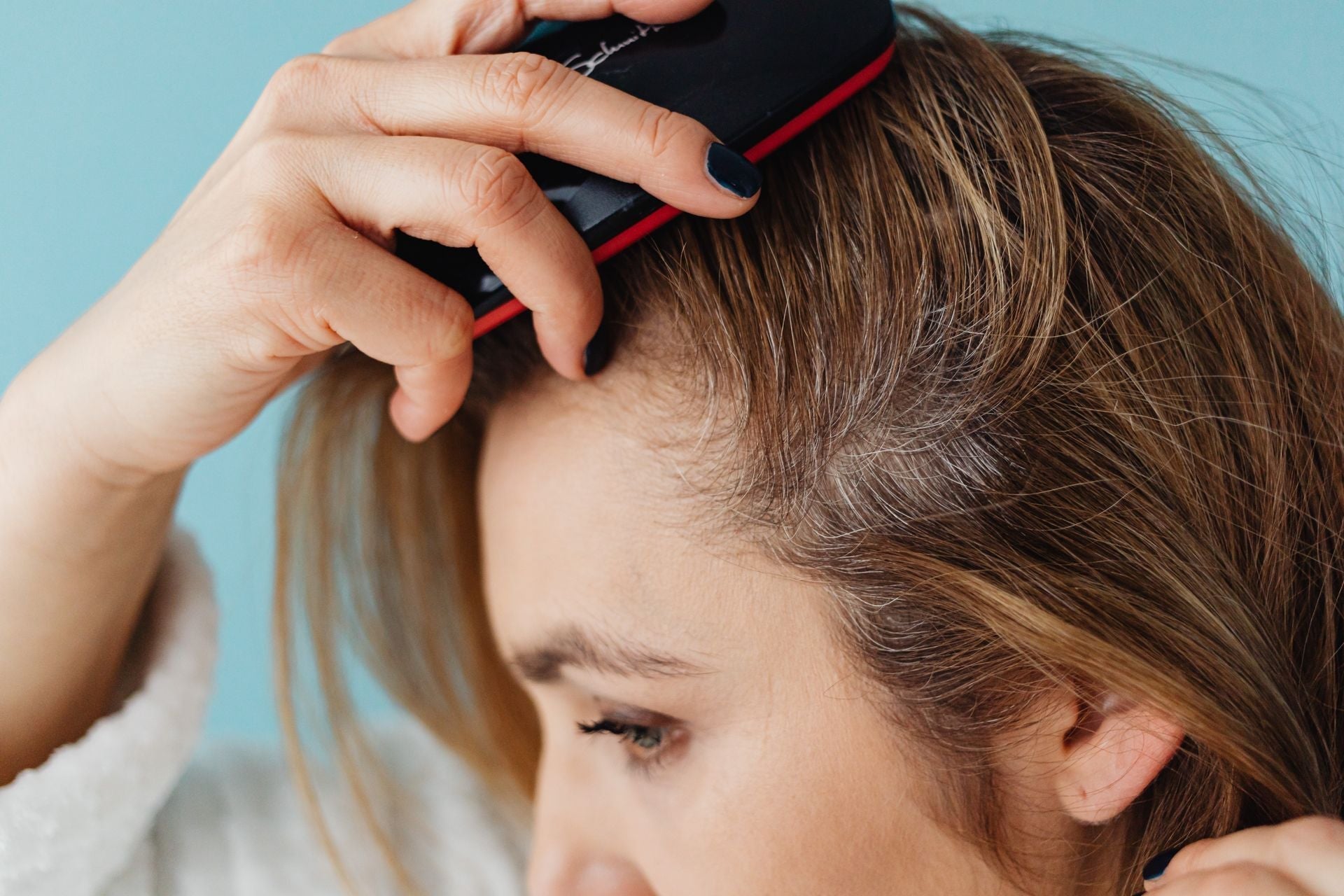
You've been under pressure for months. Work deadlines, family responsibilities, financial worries, or perhaps something more acute like a bereavement or relationship breakdown. You've been coping, or at least you thought you were. Then one day you notice your hair is shedding far more than usual. Handfuls in the shower. A brush full every morning. A parting that looks wider than it did three months ago. Stress-related hair loss is real, common, and often profoundly unsettling. Unlike genetic hair thinning that progresses gradually over years, stress-induced shedding can feel sudden and dramatic. The good news? It's usually temporary and reversible. The frustrating part? Recovery takes time, and the hair loss itself becomes another source of stress, creating a cycle that's difficult to break. Let's talk about what stress actually does to your hair, how to tell if that's what you're dealing with, and what genuinely helps versus what's just noise. What Stress Does to Your Hair Cycle To understand stress-related hair loss, you need to understand the hair growth cycle. Each follicle operates independently, cycling through three phases: Anagen (growth phase): Lasts 2-7 years. The follicle is actively producing hair. About 85-90% of your hair is normally in this phase. Catagen (transition phase): Lasts 2-3 weeks. Growth stops, the follicle shrinks, and the hair detaches from its blood supply. Telogen (resting phase): Lasts 2-4 months. The hair rests in the follicle before eventually shedding to make way for new growth. About 10-15% of your hair is normally in this phase. When you experience significant physical or emotional stress, your body can push a much larger percentage of hairs prematurely into the telogen phase. This is called telogen effluvium, and it's the most common type of stress-related hair loss. Here's the particularly confusing part: you don't see the effects immediately. The hairs that shifted into telogen stay in the follicle for 2-4 months before shedding. This means the hair loss you're experiencing now is likely related to a stressor from several months ago, not necessarily what's happening in your life today. Types of Stress That Trigger Hair Loss Not all stress affects hair equally, and there's significant individual variation in who experiences stress-related shedding. But certain types of stress are more commonly implicated: Physical Stress Major surgery, severe illness, high fever, significant weight loss (particularly rapid weight loss), childbirth, or stopping hormonal contraception can all trigger telogen effluvium. Your body interprets these events as threats to survival and diverts resources away from non-essential functions like hair growth. Psychological Stress Chronic work stress, relationship breakdown, bereavement, financial crisis, or ongoing caregiving responsibilities can all contribute. The key word here is "chronic." Short-term stress doesn't typically cause noticeable hair loss. It's sustained stress over weeks or months that disrupts the hair cycle. Nutritional Stress Restrictive dieting, eating disorders, or malabsorption issues create a state of nutritional stress even if you're not psychologically stressed. Your body prioritises vital organs over hair growth. If it's choosing between keeping your heart functioning and growing hair, your hair loses every time. Inflammatory Stress Autoimmune flares, chronic infections, or persistent inflammation from conditions like PCOS or endometriosis can trigger hair shedding even when you don't consciously feel "stressed." Your immune system is under strain, and that manifests in multiple ways, including disrupted hair growth. How to Tell If Stress Is Behind Your Hair Loss Several clues can help you identify stress-related shedding versus other types of hair loss: The Timing Can you identify a significant stressor 2-4 months before the shedding started? A house move, job change, illness, loss, or major life disruption? If there's a clear trigger with the right timeline, telogen effluvium is likely. The Pattern Stress-related hair loss is typically diffuse, meaning it affects the entire scalp rather than specific areas. If you're losing hair predominantly at the crown or temples in a distinct pattern, it's more likely to be hormonal or genetic thinning (though stress can exacerbate these conditions). The Pull Test Gently grasp about 50-60 hairs near the scalp and pull slowly but firmly. In normal conditions, you should see 1-2 hairs come away. With active telogen effluvium, you might see 5-10 or more. The hairs should have a small white bulb at the root, indicating they've completed their growth cycle (as opposed to breaking mid-shaft). The Shedding Volume Normal shedding is 50-100 hairs per day. With telogen effluvium, you might lose 200-300+ hairs daily. If you're seeing clumps in the shower or brush, far more than you're used to, and it's been sustained for several weeks, that suggests telogen effluvium rather than normal fluctuation. Other Symptoms Are you also experiencing fatigue, difficulty sleeping, changes in appetite, muscle tension, digestive issues, or heightened anxiety? These are all signs that your stress response system is overactive, which supports the connection to your hair loss. Why Recovery Takes Time (And Why That's Actually Hopeful) Here's the part that's both frustrating and reassuring: even after you've removed or reduced the stressor, the hair loss will continue for a while. Remember that 2-4 month lag? Once hairs are in the telogen phase, they're going to shed. You can't reverse that process. However, new hairs are already being formed. Follicles that shifted into telogen are now moving back into anagen. Within 3-6 months of addressing the underlying stress, you should see shedding slow down significantly. Within 6-12 months, you'll likely notice regrowth, those short baby hairs that stick up around your hairline. Full recovery of hair density typically takes 12-18 months because hair grows slowly, only about 1cm per month. This requires patience and trust in the process, which is difficult when you're watching hair fall out daily. What Actually Helps: A Practical Recovery Plan Step One: Identify and Address Active Stressors This sounds obvious but it's worth stating clearly: if you're still in the midst of chronic stress, your hair loss is unlikely to resolve fully. You don't need to eliminate all stress from your life (impossible), but you do need to reduce the chronic activation of your stress response system. This might mean setting boundaries at work, seeking support for caregiving responsibilities, treating an underlying health condition, or working with a therapist if you're dealing with trauma or persistent anxiety. The hair loss itself is a signal that your body is struggling. Listen to it. Step Two: Rule Out Underlying Deficiencies Stress increases your body's demand for certain nutrients whilst potentially reducing your appetite and digestive efficiency. Common deficiencies that compound stress-related hair loss include: Iron and ferritin: Stress can worsen iron absorption and utilisation. Even borderline low ferritin (below 40-50 µg/L) can impair hair regrowth. If you're vegetarian, have heavy periods, or struggle with fatigue, get this checked. B vitamins: Stress depletes B vitamins, particularly B6 and B12, which are involved in red blood cell formation and protein metabolism. Biotin specifically contributes to the maintenance of normal hair. Zinc: Involved in hundreds of enzymatic reactions, including protein synthesis. Stress increases zinc utilisation. Low zinc can prolong telogen effluvium. Vitamin D: Plays a role in hair follicle cycling. Deficiency is extremely common in the UK, particularly in winter, and can contribute to prolonged shedding. Ask your GP for blood tests covering these markers. If supplementing, choose bioavailable forms: bisglycinate for iron and zinc, methylcobalamin for B12, pyridoxal 5-phosphate for B6. These are absorbed far more efficiently than cheap oxide or sulphate forms. Step Three: Prioritise Protein and Overall Nutrition Your hair is made of keratin, a protein. During stress, your body may catabolise (break down) protein for more immediate energy needs. Ensuring adequate protein intake signals to your body that resources aren't scarce. Aim for at least 1-1.2g of protein per kilogram of body weight daily. Include high-quality sources: eggs, fish, poultry, Greek yoghurt, legumes, nuts. Spread intake throughout the day rather than loading it all at dinner. Also ensure you're eating enough overall. Stress often suppresses appetite, and chronic under-eating creates another layer of stress on the body. Your hair follicles need energy and building blocks to function. Step Four: Support Your Stress Response Physiologically You can't always change external stressors, but you can support how your body handles them. Several nutrients and compounds have been researched for their stress-modulating properties: Ashwagandha: An adaptogenic herb traditionally used in Ayurvedic medicine. Some research suggests it may help reduce cortisol levels and support the body's stress response, though more research is needed. Vitamin C: Your adrenal glands have the highest concentration of vitamin C in the body and utilise it during stress hormone production. Supplementing with buffered forms like calcium ascorbate can support this process without gastric irritation. Magnesium: Involved in over 300 biochemical reactions, including those related to stress response and sleep. Many people are subclinically deficient. These aren't miracle cures, but they can help take the physiological edge off chronic stress, which creates better conditions for hair regrowth. Step Five: Optimise Sleep Hair grows primarily during deep sleep phases when growth hormone is released. Chronic stress disrupts sleep quality, which then impairs recovery from the stress itself. This creates a vicious cycle. Prioritise sleep hygiene: consistent sleep and wake times, cool dark room, no screens an hour before bed, limited caffeine after midday. If you're struggling with persistent insomnia, this warrants professional help. Hair regrowth requires your body to be in a restorative state regularly. Step Six: Movement, Not Necessarily Exercise Intense exercise is another stressor on the body. If you're already dealing with chronic stress and hair loss, adding punishing workouts can compound the problem. However, gentle movement like walking, yoga, swimming, or tai chi can help regulate cortisol, improve sleep, and support overall wellbeing without adding strain. The goal is stress reduction, not additional physical stress. Step Seven: Scalp Care (Within Reason) A healthy scalp environment supports better regrowth. Some people find that ingredients that support scalp circulation, like cayenne pepper extract, or those that provide building blocks for hair structure, like bamboo extract (which provides silica), can be helpful as part of a comprehensive approach. However, don't fall into the trap of obsessively applying products or stimulating your scalp for hours daily. That becomes another source of stress and is unlikely to override systemic issues. What Doesn't Help (Despite What You'll Read Online) Expensive topical serums promising rapid regrowth: These can't override a systemic stress response. Save your money. Inversion methods or scalp massage for hours: Blood flow to the scalp isn't the limiting factor in stress-related hair loss. Hormonal and nutritional factors are. Biotin megadoses alone: Whilst biotin contributes to normal hair maintenance, taking 10,000mcg daily won't reverse telogen effluvium if the underlying stress isn't addressed and other nutrients are deficient. Trying to force regrowth faster: Hair has a biologically determined growth rate. You cannot hack your way past this. Attempts to do so usually just create more stress. When the Hair Loss Itself Becomes the Stressor Here's the particularly cruel paradox: stress causes hair loss, then the hair loss becomes a significant source of stress, potentially perpetuating the shedding. You check your hairline obsessively. You avoid social situations. You feel less attractive, less confident, more anxious. This is very real and very valid. But it's also something you need to actively manage, because that ongoing psychological stress can delay recovery. If you find yourself spiralling, consider speaking with a therapist who understands health anxiety or body image concerns. Cognitive behavioural therapy can be particularly helpful for breaking obsessive checking behaviours and catastrophic thinking patterns. Also, connect with others who've been through it. Online communities for telogen effluvium can be reassuring (though be cautious about spending too much time in forums where people are in acute distress, as that can worsen anxiety). The Timeline to Recovery Assuming you've addressed the underlying stressor and optimised nutrition: Weeks 0-8: Shedding continues but may start to slow slightly. This is when supplementation and stress management begin. Weeks 8-16: Shedding should noticeably decrease. You might start seeing baby hairs emerging, though they're too short to impact overall appearance yet. Months 4-6: Regrowth becomes more apparent. The density improves gradually but noticeably in photos. Months 6-12: Continued improvement. Hair returns closer to baseline, though some people find it takes a full 12-18 months to feel completely back to normal. Everyone's timeline varies. Some people recover faster, particularly if they catch it early and address triggers quickly. Others take longer, especially if multiple compounding factors exist. The Bottom Line Stress-related hair loss is frightening, but it's also one of the most reversible types of hair loss. Your follicles aren't damaged. They're responding to signals from your body that resources are scarce and survival is uncertain. Once you change those signals through stress management, adequate nutrition, and time, your hair will recover. The hardest part is patience. Hair doesn't grow on your timeline. It grows on its own biological schedule. Your job is to create the best possible conditions and then trust the process, even when every instinct is screaming at you to do more, try harder, fix it faster. You will get through this. Your hair will grow back. But you need to be as kind to yourself during the recovery as you'd be to a friend going through the same thing.
Learn more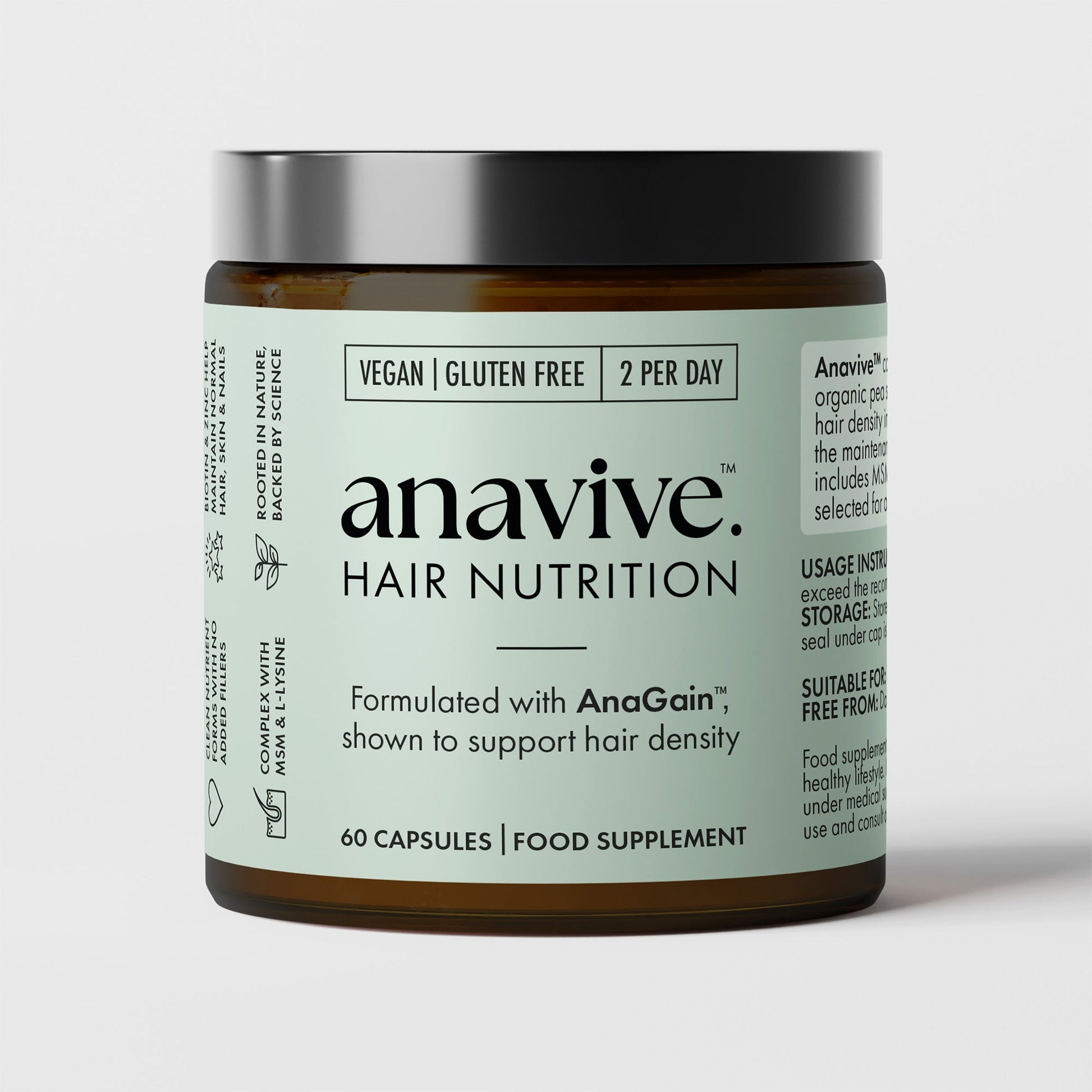




Anavive Hair Nutrition - 1 Month Supply
Anavive Hair Nutrition - 1 Month Supply
Thinning doesn’t just change your hair, it changes how you feel. The extra strands in the shower. The way you adjust your parting. The quiet sense that something is shifting. Hair rarely thins without reason, which is why Anavive is built to support the internal foundations healthy hair depends on.
Not all supplements are created equal - and the difference rarely shows on the label. Most use poorly absorbed ingredient forms that pass through your body largely unused. If the nutrients don't absorb, the formula doesn't work. Even with a decent diet, consistently hitting the right levels of zinc, iron, B vitamins, and botanicals that have been seen to support hair follicle activity isn't something food alone reliably delivers.
Anavive™ is built around a different principle: that the right ingredient forms, in the right combination, give your body something it can actually use.
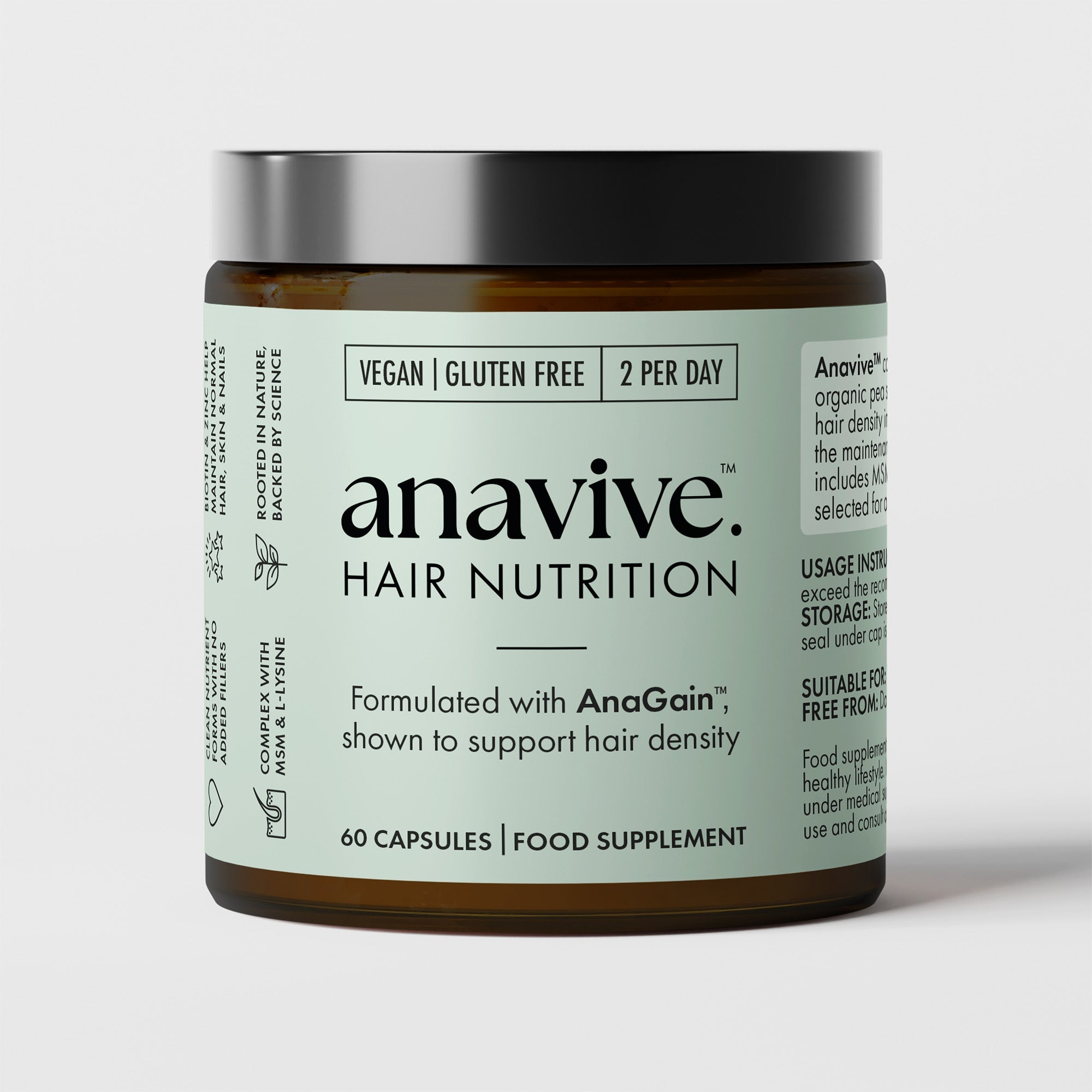
Anavive is a premium daily hair health supplement formulated for men and women experiencing excessive shedding, thinning or slow regrowth. At its core is AnaGain™ - an extract from organic pea shoots, clinically studied to influence the signals that determine how many follicles are in an active growing phase. Alongside it, zinc bisglycinate and iron bisglycinate - forms chosen for their superior absorption over the oxides and sulphates used in many supplements. Vitamin B6 is delivered as P-5-P, the form your body can use directly, and Vitamin C as Calcium Ascorbate - which also contributes to normal iron absorption. Zinc and biotin contribute to the maintenance of normal hair.
The result is a formula designed to work at the level where most others don't: absorption.
Made in the UK, vegan and allergen-free, Anavive™ helps promote visibly thicker and healthier hair with consistent daily use.
In stock
 Order 3 and save £11
 Order 6 and save £27
- Delivery on us for orders over £40
