If you've landed here, you're probably not casually browsing. You're on Mounjaro or Ozempic, things are going well with the weight loss, and then you noticed it. More hair on your brush. A handful in the shower. A part that looks slightly wider than it used to. And now you're trying to figure out if you've just made a terrible trade-off.
The short answer is: you almost certainly haven't. But let's actually explain what's going on, because understanding the mechanism is the only thing that will stop the panic.
The drug isn't attacking your hair
This is the first thing to know. Tirzepatide (the active ingredient in Mounjaro) and semaglutide (the active ingredient in Ozempic and Wegovy) are not directly toxic to your hair follicles. They are not poisoning your scalp. The hair loss you're experiencing is almost certainly not a pharmacological side effect in the traditional sense.
What's actually happening has a name: telogen effluvium. And it's triggered not by the drug itself, but by rapid weight loss.
Here's how it works. Your body is extraordinarily good at prioritising survival. When you drop weight quickly - which GLP-1 medications can accelerate - your body registers that as a significant physical stress. In response, it shunts resources away from non-essential functions. Hair growth is metabolically expensive and, from your body's point of view, not urgent. So follicles that were happily in their active growth phase (called anagen) get pushed prematurely into a resting phase (called telogen).
They sit there quietly for a few months. Then they shed.
This is why the timing feels so confusing. You've been on the medication for three or four months, things are going brilliantly, and suddenly your hair starts falling out. It's not happening because something just went wrong. It happened weeks or months ago, and you're only seeing it now. The shedding is the end of the process, not the start of it.
Will my hair grow back?
Yes. Telogen effluvium is almost always temporary. The follicles are resting, not dead. Once the acute stress signal subsides - which it typically does as weight loss slows to a steadier pace - the follicles cycle back into their growth phase and hair starts coming back through.
The timeline, roughly: shedding usually starts two to three months after the triggering event. The shedding phase itself tends to last three to six months. After that, you're looking at six to twelve months for regrowth to become clearly visible. That's a long window, and it's frustrating. But it is a window with an end.
Clinical data shows this affects somewhere between 5% and 10% of people on GLP-1 medications. You are not alone in this, but it's also not inevitable. Some people go through the whole process and notice very little. The difference often comes down to nutritional status - which is where things get more actionable.
Should I stop taking Mounjaro or Ozempic?
That's a conversation to have with the prescribing doctor, not something to decide based on a blog post. But one thing worth knowing: stopping the medication won't immediately reverse the shedding. The hair that's already in telogen is going to fall out regardless. The follicles made that decision weeks ago. So stopping doesn't give you back the hair you've lost.
What it might do is reduce the ongoing stress signal - but that's a clinical decision with your weight loss goals factored in, not a reflex to the hair situation.
Where nutrition actually enters the picture
This is the part that's genuinely within your control, and it matters more than most people on GLP-1 medications realise.
When you eat significantly less - which is exactly what these medications help you do - you're also taking in fewer micronutrients. Vitamins and minerals that your hair follicles depend on. Iron, zinc, B vitamins, vitamin C. If you were already running low before you started, a calorie deficit accelerates that depletion. And hair follicles are some of the most nutritionally sensitive cells in your body.
Two areas in particular:
Iron
Iron deficiency is one of the most common and most overlooked contributors to hair shedding in women. Hair follicles need iron to function. The relationship is well established. When iron status drops - even before it gets to full anaemia - follicle activity can be affected. People on GLP-1 medications who are eating less red meat, less in general, need to pay close attention to this.
Vitamin C plays a role here too, because it contributes to iron absorption from food and supplements. It's not enough to take iron in isolation if absorption is poor. Getting both right matters.
Zinc
Zinc contributes to the maintenance of normal hair. That's a statement supported by EFSA-approved research. Zinc status tends to drop with reduced food intake, and it's important not just for the hair cycle itself but for how efficiently your body uses other nutrients. Zinc bisglycinate - a chelated form - is absorbed considerably better than the cheaper zinc oxide you'll find in a lot of basic supplements. If you're going to supplement zinc, the form matters.
Protein and sulphur-based amino acids
Hair is primarily made of keratin, which is a protein. When total protein intake drops - which is a real risk on GLP-1 medications where appetite suppression is aggressive - the body has less raw material to work with. Getting adequate protein (broadly, 0.8g to 1g per kilogram of bodyweight per day) isn't just about muscle mass. It directly supports the structural integrity of your hair.
MSM (methylsulfonylmethane) provides a source of bioavailable sulphur, which is a component of keratin structure. It's not a silver bullet, but it's a sensible addition when hair health is a concern.
Biotin and B vitamins
Biotin is probably the most commercially promoted hair supplement ingredient, often to a degree that outpaces what the evidence actually supports. But biotin does contribute to the maintenance of normal hair - that's an authorised claim supported by EFSA. The issue is that most people aren't dramatically biotin deficient, and taking more biotin when your levels are already fine isn't going to do much.
Vitamin B6, specifically in its active form (Pyridoxal 5-Phosphate, or P-5-P), plays a role in hormonal regulation. Hormonal disruption is one of the background factors that can make telogen effluvium worse. P-5-P is the form your body can actually use directly, rather than the standard pyridoxine form that needs to be converted first.
The follicle itself: supporting the growth cycle
Beyond the nutritional foundations, there's something else worth understanding: the hair growth cycle has specific biological signals that push follicles from resting back into their active phase.
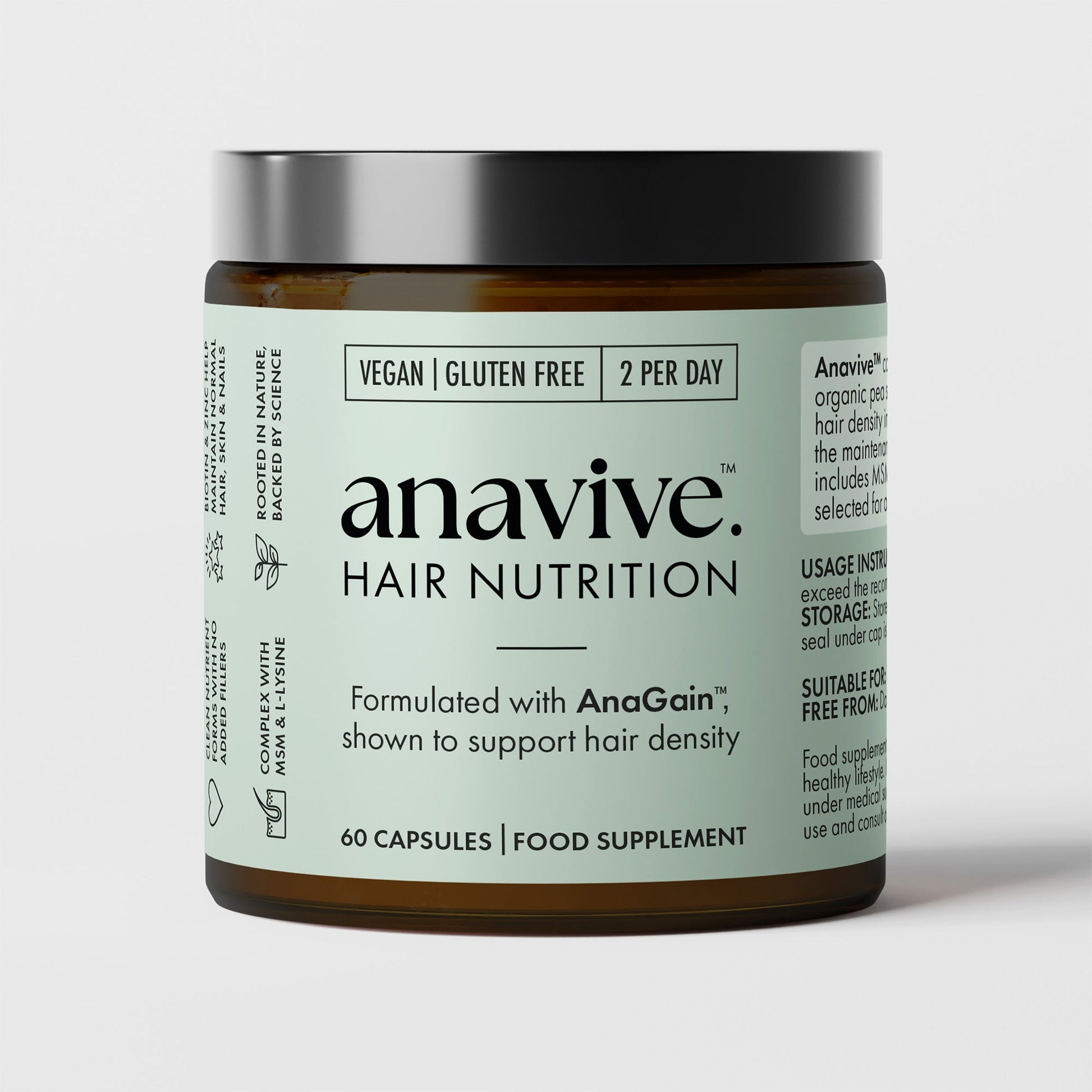
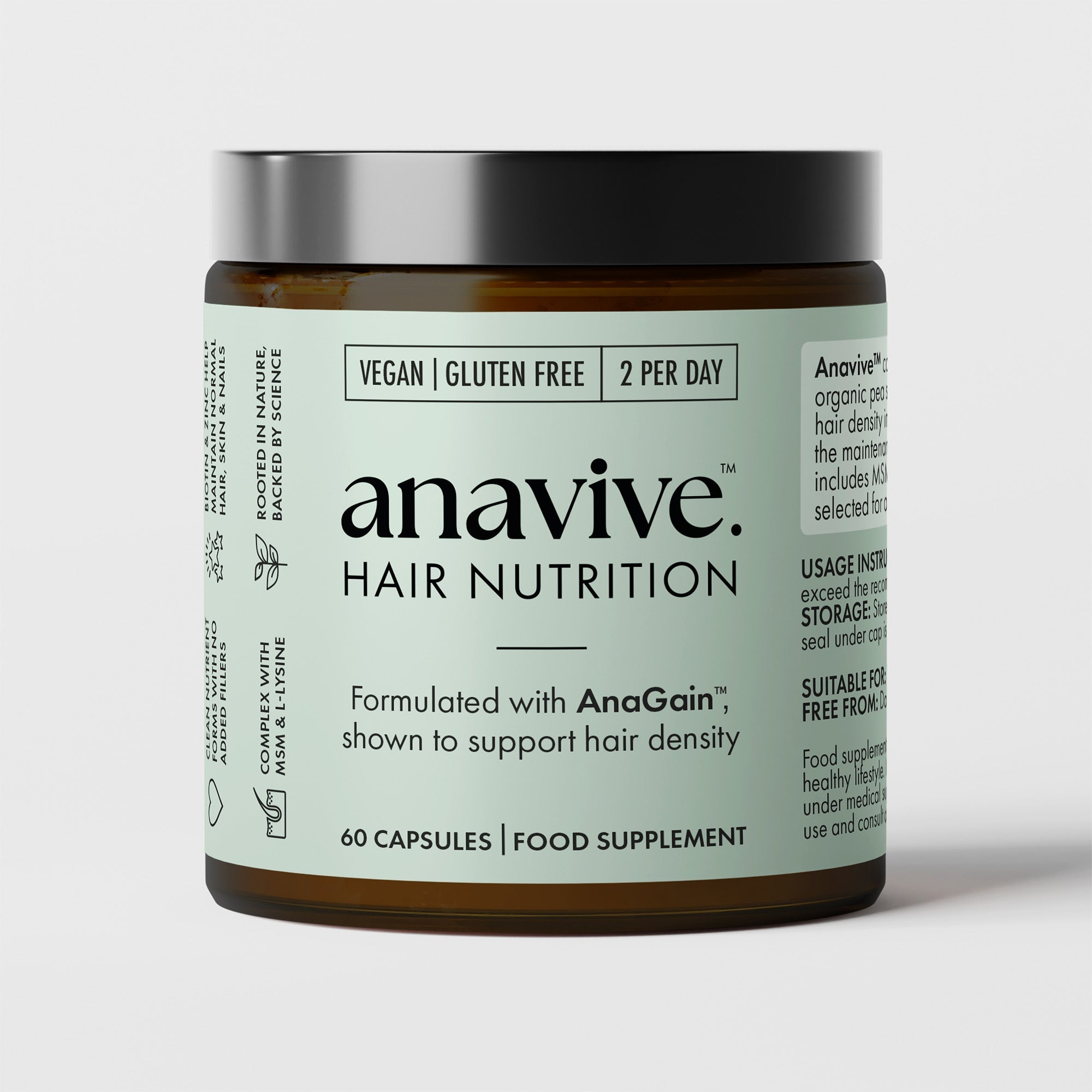
AnaGain, a clinically studied extract from germinated pea shoots (Pisum sativum), has been shown in a published peer-reviewed trial to support the signalling molecules in dermal papilla cells - specifically FGF-7 and Noggin - that play a role in initiating new hair growth cycles. In a clinical study published in Phytotherapy Research (2020), participants with mild to moderate hair loss saw a statistically significant reduction in daily hair loss after 28 days of supplementation, with continued improvement at 56 days.
This is relevant when the underlying issue is a disrupted hair cycle - which is exactly what telogen effluvium is. Supporting the biological triggers that encourage follicles back into their active phase is a logical approach when the cycle has been pushed off track.
What a sensible supplementation approach looks like
There's no supplement combination that stops telogen effluvium in its tracks. Anyone who tells you otherwise is overselling. What nutrition and supplementation can do is address the micronutrient gaps that make the shedding phase worse, and give your follicles the best possible conditions in which to recover.
If you're on Mounjaro or Ozempic and concerned about hair loss, the things worth prioritising are: iron status (checked via a blood test where possible, ideally including ferritin), zinc in a well-absorbed form, adequate protein intake, vitamin C for absorption support, and active B vitamins rather than cheaper inactive forms.
The ingredient form question matters here. A supplement that contains zinc oxide, standard ascorbic acid, and basic pyridoxine is not the same as one containing zinc bisglycinate, calcium ascorbate, and Pyridoxal 5-Phosphate - even if the label doses look similar. When you're already eating less, you need what you're taking in to actually be absorbed and used. Cheaper forms reduce tolerability and often reduce absorption too.
The honest timeline
If you've just noticed shedding, you're probably two to three months into the process. The shedding may continue for another few months. That's uncomfortable to hear, but it's more useful than pretending there's a fast fix. The follicles that are going to shed have already made that decision. What you can influence is the nutritional environment they come back into, and whether you give the recovery cycle the support it needs.
Most people who address the nutritional gaps, maintain adequate protein, and give it time do see their hair come back. It takes longer than they'd like. But the hair loss you're experiencing on GLP-1 medication is almost never permanent, and it almost never means you've made the wrong choice.
It means your body went through something significant, and it needs a bit of support to recover.
This article is for educational purposes only and does not constitute medical advice. If you are concerned about hair loss, please speak with your GP or healthcare provider. Food supplements are not intended to diagnose, treat, cure or prevent any disease.